
Call us free on 0808 168 9540
Call us free on 0808 168 9540
Protected species surveys can only be conducted during the active period for those animals, so ecology needs to be considered early stage in the planning process.








Bats, great crested newts, hazel dormice, water voles and badgers are examples of protected species with specific legislative protection. Any development or other type of project that might harm protected species or habitats must take measures, including ecology surveys and habitat creation and management,
Phlorum works closely with our clients when planning and carrying out protected species surveys. We provide Phase 2 habitat surveys across southern England, including Sussex, London, Surrey, Kent, Dorset, Hampshire, Wiltshire, Somerset and Devon.
Great crested newts and pool frogs are the only British amphibians that are European Protected Species (EPS). The pool frog is very rare and unlikely to be found on development sites. However, developers need to be aware of the possibility of great crested newts on their land and the implications of their presence.
The team at Phlorum can advise on amphibian and great crested newt surveys and issues and liaise with planning authorities if required. We have experienced surveyors licensed to undertake presence/absence and population assessment surveys, and we can compile European Protected Species Mitigation (EPSM) licence applications.
Badgers and their setts are protected under the Protection of Badgers Act (1992), which makes it an offence to disturb a badger while it is within a sett or to damage or destroy a sett. We have experienced surveyors to undertake badger surveys, and we can compile Nature England licence and/or class licence applications.
If the presence of badgers is suspected on a development site, then a badger survey and assessment will need to be carried out. A Development Licence will be required for any works likely to affect an active badger sett or disturb badgers occupying a sett.
All species of bats are protected in the UK. Bats use various places for roosting, breeding and hibernating, and developers need to be aware of the possible use of their land by bats and the implications for development.
Phlorum can advise and carry out various bat surveys, including:
The team can also compile European Protected Species Mitigation (EPSM) licence applications. We have experienced surveyors licensed to undertake surveys, handling, advanced licence survey techniques, and aerial tree climb inspections.
All birds, their nests and eggs are protected under the Wildlife and Countryside Act 1981 (as amended). Certain rare species (Schedule 1 birds) receive additional protection from disturbance while breeding.
Phlorum can conduct wintering and breeding bird surveys and devise suitable mitigation for various projects. We also carry out watching briefs for nesting birds.
The white-clawed crayfish is the UK’s only native crayfish. It is a crustacean protected under Schedule 5 of the Wildlife and Countryside Act (1981) (as amended) and is threatened by the introduced non-native species, the North American signal crayfish.
Phlorum can carry out white-clawed crayfish surveys to establish baseline conditions and ongoing monitoring through desktop studies, habitat assessments, torch searches, netting, eDNA and trapping. Site surveys are carried out April to October, with the optimum period being from July to September, after the crayfish have released their young.
Dormice are largely confined to southern England and inhabit woodland and hedgerows. They are generally active between mid-April and October. During this period, dormice surveys, including gnawed nut searches and nest tube surveys, can be carried out. These surveys assess the presence or likely absence of dormice at proposed development sites. A dormice survey will often take a minimum of 5 months, sometimes longer, to be carried out.
Otters are afforded legal protection under the Conservation of Habitat and Species Regulations 2017, and under Schedule 5 of the Wildlife and Countryside Act (1981). It is illegal to kill, injure or capture an otter, destroy, damage, or obstruct an otter’s resting place, or intentionally or recklessly disturb an otter while it occupies its resting place. Despite significant population decreases in the last century, otter populations are now well-established in most of the UK. Phlorum carries out otter surveys in Sussex, London, Surrey, Kent, Dorset, Somerset, Hampshire, Wiltshire and Devon.
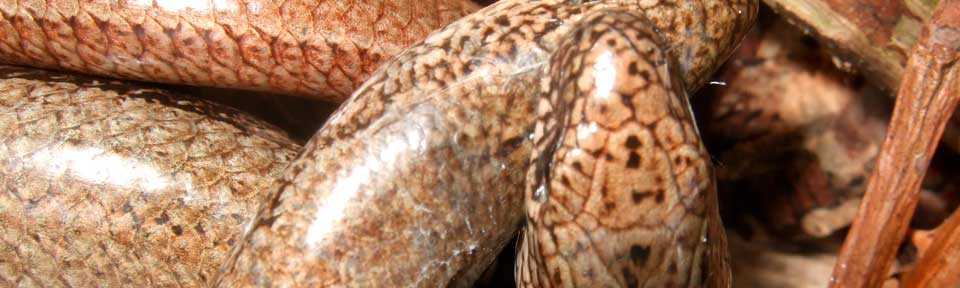
Six reptile species are found in the UK. These include the common lizard, slow worm, adder, grass snake, sand lizard and smooth snake. All species are protected from killing and injury.
Sand lizards and smooth snakes are offered a higher level of protection. However, these species are rarely encountered on development sites, while the other four species are more widespread and are often encountered.
Phlorum can carry out presence/absence reptile surveys and design and implement suitable mitigation to ensure an efficient and successful result for the client and for the reptiles.
Water voles inhabit burrows along the banks of water courses. They are protected in the UK under Schedule 5 of the Wildlife and Countryside Act 1981. It is an offence kill, injure or take them. It is also an offence to damage or destroy a structure or place they use to shelter, or to disturb them in a place of shelter.
Phlorum staff can provide advice, carry out water vole surveys, and devise appropriate mitigation when required. Water vole surveys are conducted between March and September. Although this species is active all year round, it is markedly less active during the winter.
If you do not see the protected species survey you require above, please don’t hesitate to contact one of our experienced ecology consultants, who will be happy to offer advice based on your specific needs and circumstances.