Read some of our case studies
Client - CDCE
Location - EAST LONDON
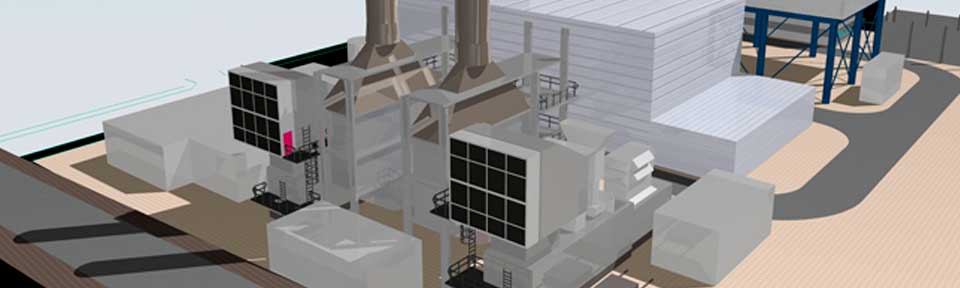
We managed and provided technical input to the Pollution Prevention and Control application to the Environment Agency for a proposed combined-cycle gas turbine community energy centre, with district heating. This also included the production of the air quality chapter that formed part of the Environmental Statement for the planning application to the local authority.
Client - 3R AND THE ANDERSON GROUP
Location - DORSET
The site was formerly a derelict gas works that had caused considerable contamination to the local environment. Our work involved monitoring of noise, vibration and emissions to air during the remediation of contaminated soils and groundwater. Once the contaminated material had been treated, construction works were undertaken to build over 300 residential properties on the site. Japanese knotweed was also identified on the site and works to eradicate it were also completed.
Client - MCCARTHY & STONE
Location - VARIOUS
We have provided a number of solutions to knotweed infestations on McCarthy & Stone development sites. These have included the use of herbicides, complete removal of infested materials to landfill, reduced level excavations with the installation of membranes and surveys to monitor for the presence of knotweed.
Client - CELTIC
Location - Fleet Lane St Helens
Challenge
There were three main areas of knotweed growth on the site. One under a proposed car park area, the other two in the rear gardens of proposed houses.
The challenge was to eradicate the Japanese knotweed growth without removing any knotweed material off-site and ensuring eradication within one growing season.
Approach
The proposed approach was to fully excavate the knotweed growth and to bury the material on-site in a burial pit encapsulated in a membrane.
The knotweed material from the proposed rear gardens was fully excavated and stored on a tarmac area of the site. It was important to ensure that all the knotweed growth in the proposed rear gardens was removed. A reduced excavation of the knotweed growth in the proposed car park area was undertaken. Then a horizontal root membrane was laid over the car park area and the membrane covered with clean soil.
The excavated material was then surveyed and a burial pit was created. A Phlorum approved root membrane was then used to line the bottom and side of the burial area. The knotweed material was then carefully backfilled into the pit, ensuring not to tear or rip the membrane. Root membrane was then used to seal the top of the burial area.
Results
The knotweed growth was dealt with speedily and efficiently. A reduced excavation was undertaken in the proposed car park area to reduce the amount of waste material as much as possible. The use of the burial area in a proposed open space meant that no knotweed material needed to be removed off-site. The site is now part of a monitoring programme to ensure no regrowth occurs.
Client - CELTIC
Location - Warrington
Challenge
The challenge was approximately 1,000m2 of above ground Japanese knotweed growth, mainly along the bank of the lower former railway lines. The proposed development of the site involved constructing three blocks of flats on the higher ground, with a car park and water attenuation system on the lower land, i.e. in the knotweed area.
The client wanted a cost effective and quick solution to the Japanese knotweed eradication problem.
Approach
The proposed approach was to fully excavate the knotweed growth on the higher ground under the proposed flats and undertake a reduced excavation and installation of a root membrane along the former car park area. The site would then be monitored to ensure no re-gowth.
A cut and fill option was used for the reduced knotweed excavation as land at one end of the knotweed area required lowering and at the other raising due to the requirements of the water attenuation system. Only the excess excavated material was removed offsite. A horizontal root barrier was installed across the knotweed reduced excavation area and covered in sand. A vertical root barrier was installed along the bank of the knotweed area to stop any knotweed growth migrating into the area of the new flats.
Results
The knotweed growth was dealt with speedily and efficiently. The knotweed growth from the higher ground was removed first to enable the client free access to the foot print of the proposed flats. The excavated knotweed material on the lower ground was reduced significantly by the cut and fill operation and a relatively small amount of material was removed from site. A membrane was installed over the remaining in situ knotweed growth. The area is now part of a monitored programme to ensure no re-growth occurs.
Client - Wates Homes
Location - Eastbourne Road, Uckfield, East Sussex
Wates Homes put together a planning application to develop 300 houses on a site on the outskirts of Uckfield, East Sussex. This was as part of a large regeneration programme for the town, which required a marked increase in the number of new homes available in the area.
Uckfield is well linked to the surrounding towns by road and rail. The development proposal was to provide new homes that would be energy and resource efficient in their construction and operation. It was also a key aim to provide transport solutions that would encourage the use of modes of travel that are more sustainable and environmentally friendly than private cars.
ApproachPhlorum was involved at the pre-masterplan stage and provided input to the Environmental Impact Assessment process by producing a technical assessment of air quality impacts. This was for the design, construction and operation of the development. The assessment also looked at the combined impact of other large developments in the area as part of the regeneration programme and involved close consultations with relevant stakeholders, including Wealden District Council.
ResultsThe assessment methodology and results were approved by the local authority. This resulted in housing being located closer to a busy road than was initially thought possible, which allowed more cost-effective use of the site area by Wates Homes.
Planning permission was approved without any reassessment work being required by the client or by the council.
Client - Westfield Shoppingtowns Ltd
Location - Guildford
Challenge
The outline planning development involved a proposed shopping centre, with residential apartments above. The project required a sustainability and energy efficiency review of the proposed scheme. Its was also required to ensure that the residential properties gained a very high rating on the EcoHomes scheme.
Approach
A review of the potential energy sources was undertaken including a detailed review of potential combined heat and power systems, solar heating (solar tubes and photovoltaic cells), and local wind turbines.
The water system was evaluated taking into account grey water collection systems and the reuse of rain water. However, there were concerns about the extra piping work required by the client.
An appraisal was carried out of the materials used in the construction of the development, particularly looking at energy efficiency and energy usage in their production and transport.
The proposed designs for the residential areas were assessed against the EcoHomes scheme.
Results
The report recommended the use of a combined heat and power plant at the shopping centre, use of solar panels on the roof and the collection of rain water for watering the raised garden areas. The residential properties were compared to the EcoHomes schemes and recommendations were made to ensure a ‘Very Good’ rating.