
Call us free on 0808 168 9540
Call us free on 0808 168 9540
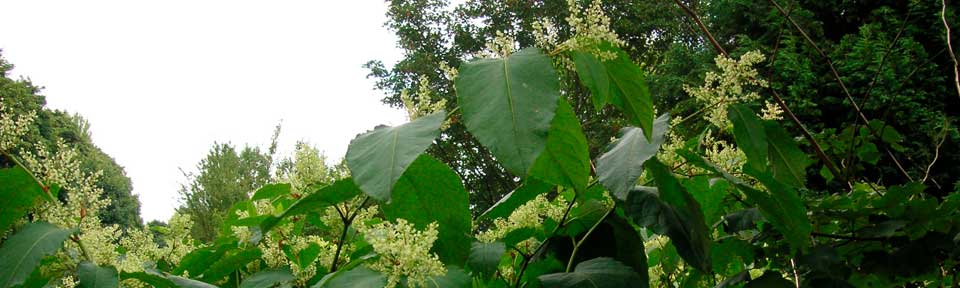
Japanese knotweed rhizomes are modified underground stems with nodes bearing buds that can generate new plants. These rhizomes function as both storage organs and reproductive units, allowing the plant to survive, spread and regenerate from small fragments.
Understanding what you’re dealing with is the first step to removing Japanese knotweed; rhizomes are not roots. This distinction is key to understanding why Japanese knotweed is so difficult to eradicate without professional expertise.
In this article, we’ll provide an overview of the physical characteristics to help you tell the difference between rhizomes and roots, the depth and lateral extent of rhizome networks, their regenerative capacity and treatment for permanent removal.
Whether you’re a land manager dealing with a knotweed infestation as part of your construction project or a property owner dealing with knotweed in your garden, this knowledge is the starting point for permanent Japanese knotweed removal.
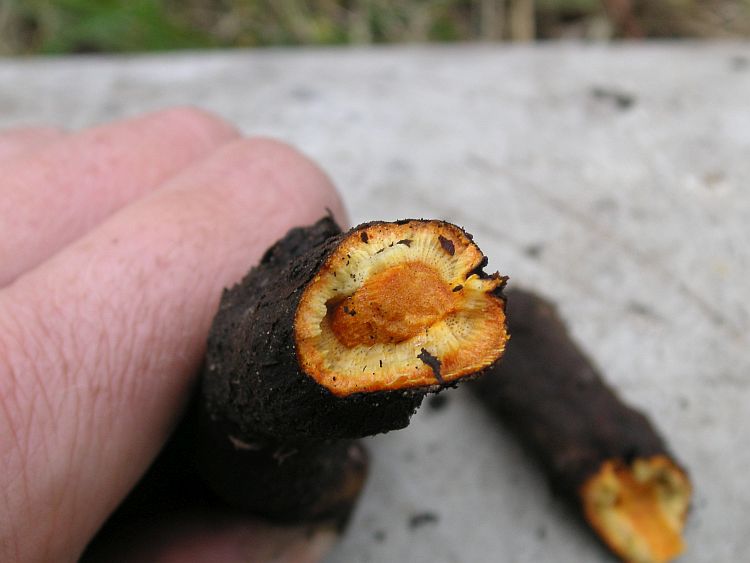
Rhizome
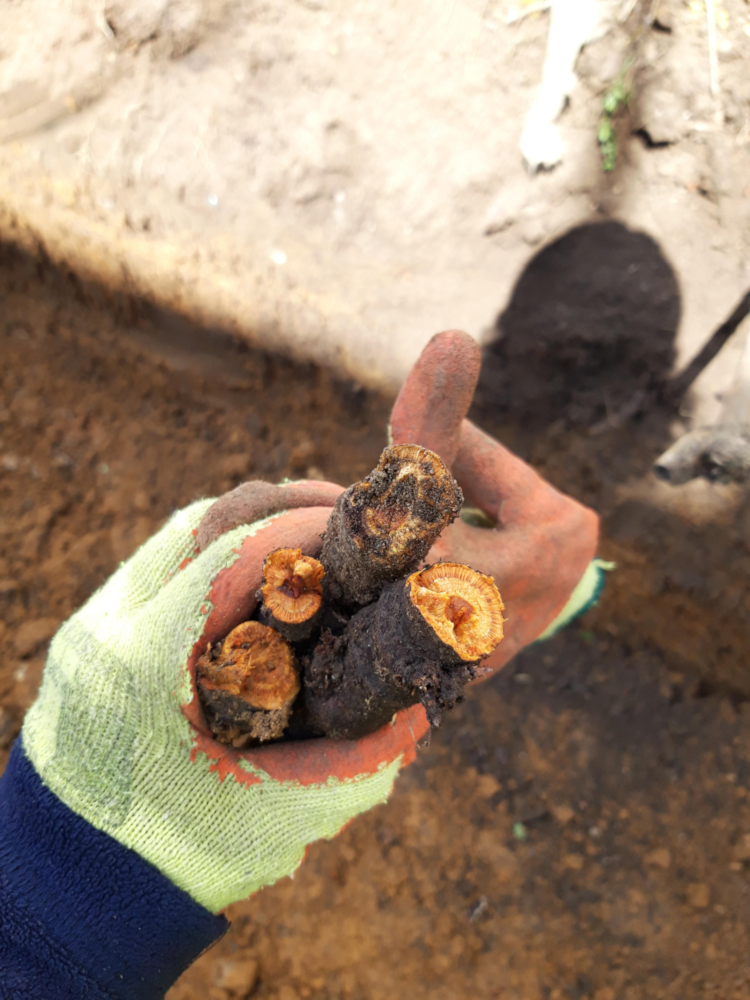
Rhizome
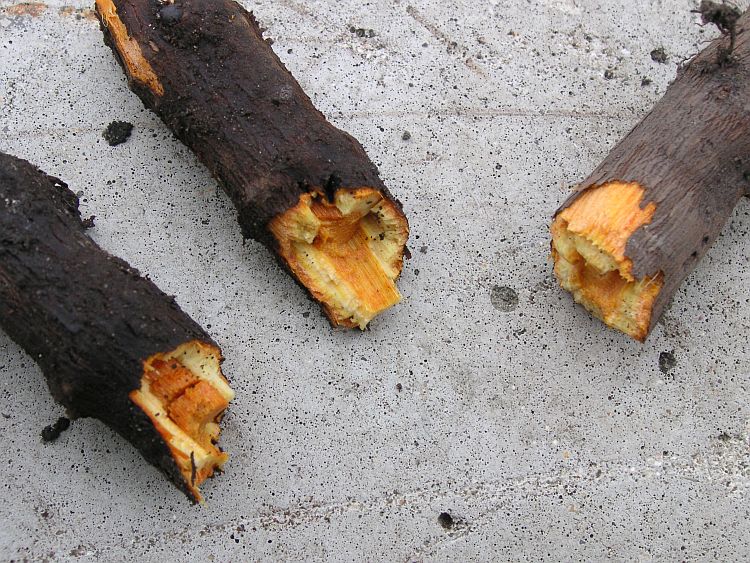
Rhizomes
If you suspect you have Japanese knotweed on your property, the rhizomes’ appearance will be the first step to help you identify Japanese knotweed. On the outside, rhizomes might appear like the dark brown roots of a typical tree or shrub. However, when you break or cut them open, you’ll see a distinctive bright orange to orange-yellow interior that confirms it as knotweed.
This vivid internal colour is the most reliable characteristic for identifying Japanese knotweed rhizomes, and it’s a key feature that Japanese knotweed contractors look for during Japanese knotweed surveys, when above ground features are absent.
The texture is equally important; Japanese knotweed rhizomes appear woody but are brittle, snapping cleanly like a carrot when you apply pressure to bend them. They typically range from 5mm to 20mm in diameter.
Physiologically, rhizomes are not roots. They are underground stems with roots attached. The root elements of the rhizomes are thin, branching strands that appear like a fibrous mesh connected to the rhizomes. These strands are the true roots that absorb moisture and nutrients from the ground. Understanding the structural differences between rhizomes and roots is a must for identification and management.
| Feature | Rhizomes | Roots |
|---|---|---|
| Function | Underground stems for anchorage, storage and reproduction | Water and nutrient absorption only |
| Appearance | Dark brown exterior, bright orange/yellow interior | Thin, fibrous, non-distinctive colour |
| Texture | Woody, brittle, snaps cleanly | Uniformly fibrous and flexible |
| Structure | Contains nodes with dormant buds along length | Mesh-like, with no nodes or buds present |
| Pith | Large, soft central core | Uniformly solid, but too thin to notice the core |
| Regenerative Capacity | Can regenerate entire plant from 1cm fragment | Cannot regenerate new plants |
Bamboo is one of many plants often mistaken for Japanese knotweed; if you’re trying to differentiate Japanese knotweed rhizomes from bamboo rhizomes, the key difference is that bamboo rhizomes are incredibly tough and will not snap easily, unlike most knotweed rhizomes. The internal colour of knotweed compared to bamboo rhizomes is another good indicator.
Bamboo rhizomes typically remain yellowish-white throughout when broken, whilst knotweed rhizomes display that characteristic orange interior. Bamboo rhizomes are also more uniformly cylindrical in shape, whereas knotweed rhizomes have a more irregular, swollen appearance with visible nodes.
For a quick field test, use a sharp knife or screwdriver to penetrate the structure’s centre. If you encounter a soft, pithy core, you’re looking at a rhizome. If the tissue is uniformly hard and woody throughout, it’ll be the root of a tree or shrub.
Most rhizome mass is concentrated in the upper 50cm of the ground, with most infestations stopping around 1m in depth. However, in favourable conditions, particularly in loose, well-drained soils or where rhizomes follow existing fissures, they can penetrate to depths of 2 to 3 metres.
The horizontal spread is equally problematic: from the visible stems above ground, rhizomes often extend laterally 2 or 3 metres beyond the stems. This extensive underground reach is why surface appearances can often dramatically underestimate the true scale of an infestation.
Over time, the rhizomes from clumps of successive generations of stems join together to form mounds called crowns.
Around two-thirds of the plant’s total biomass exists underground as a system of crowns and rhizomes, meaning that what you see above ground is just the tip of a much larger organism.
The rhizomes and stems above ground are connected by vascular tissue, creating a two-way system for nutrient movement. During the growing season, sugars produced by photosynthesis in the leaves move downward to be stored in the rhizomes. In spring, this stored energy moves upward to fuel rapid shoot growth. This bidirectional flow is crucial for understanding treatment timing.
For some herbicides, autumn applications are most effective precisely because the plant is actively moving nutrients downward for winter storage. When you apply the herbicide to the foliage or inject it into stems during this period, the plant’s own vascular system carries the chemical down into the rhizome network, where it disrupts cellular processes and eventually kills the plant.
This nutrient connection explains why repeated cutting was once thought of as an effective treatment to exhaust rhizomes. Each time the plant produces new shoots, it draws upon stored reserves in the rhizomes. If you cut the shoots before they can photosynthesise and replenish those reserves, the rhizomes are forced to draw down their energy stores again and again.
However, such a process is never going to kill the plant. It’s a bit like mowing a lawn; the grass will be kept short, but it won’t be killed by the repeated cutting.
Remember that approximately two-thirds of the plant’s biomass exists underground. This explains why cutting down all visible growth has a minimal long-term impact. Most of the organism remains intact below ground, fully capable of regrowing, like a mowed lawn.
Therefore, successful treatment must either physically remove the entire rhizome system through excavation, or systematically starve or damage it through chemical means. Surface treatments, partial removal, or short-term cutting regimes will inevitably fail because they leave the majority of the plant intact and operational.
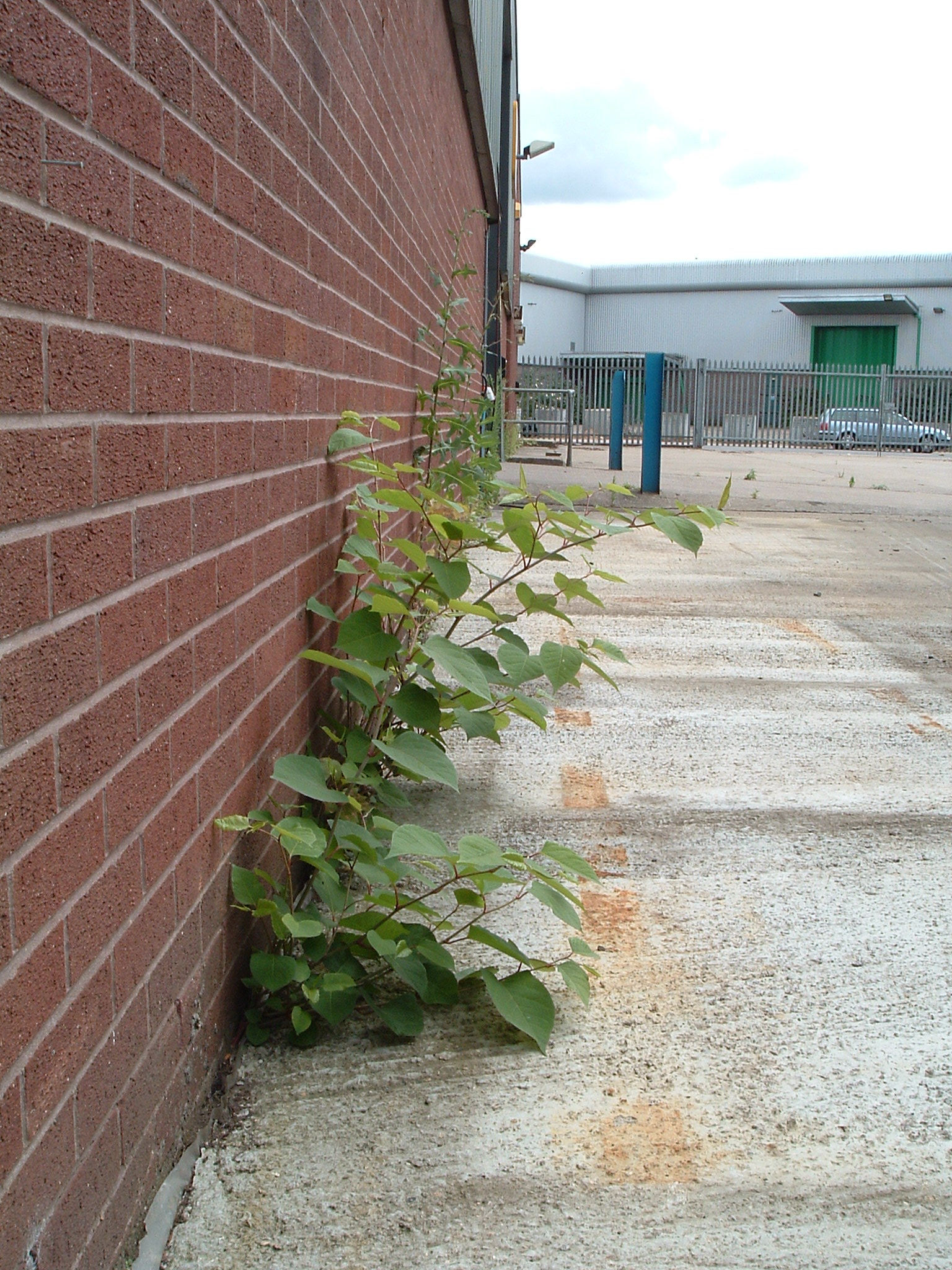
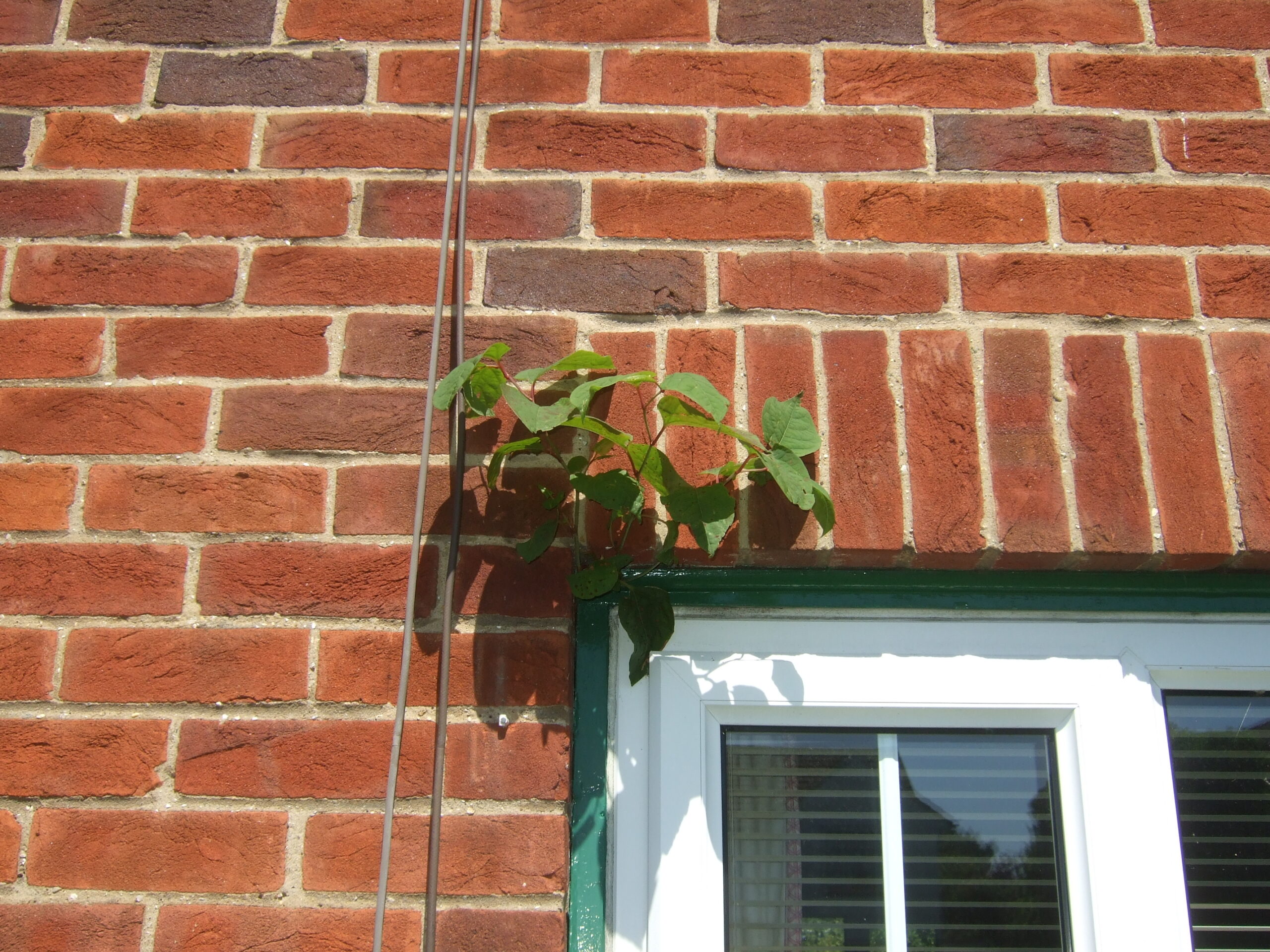
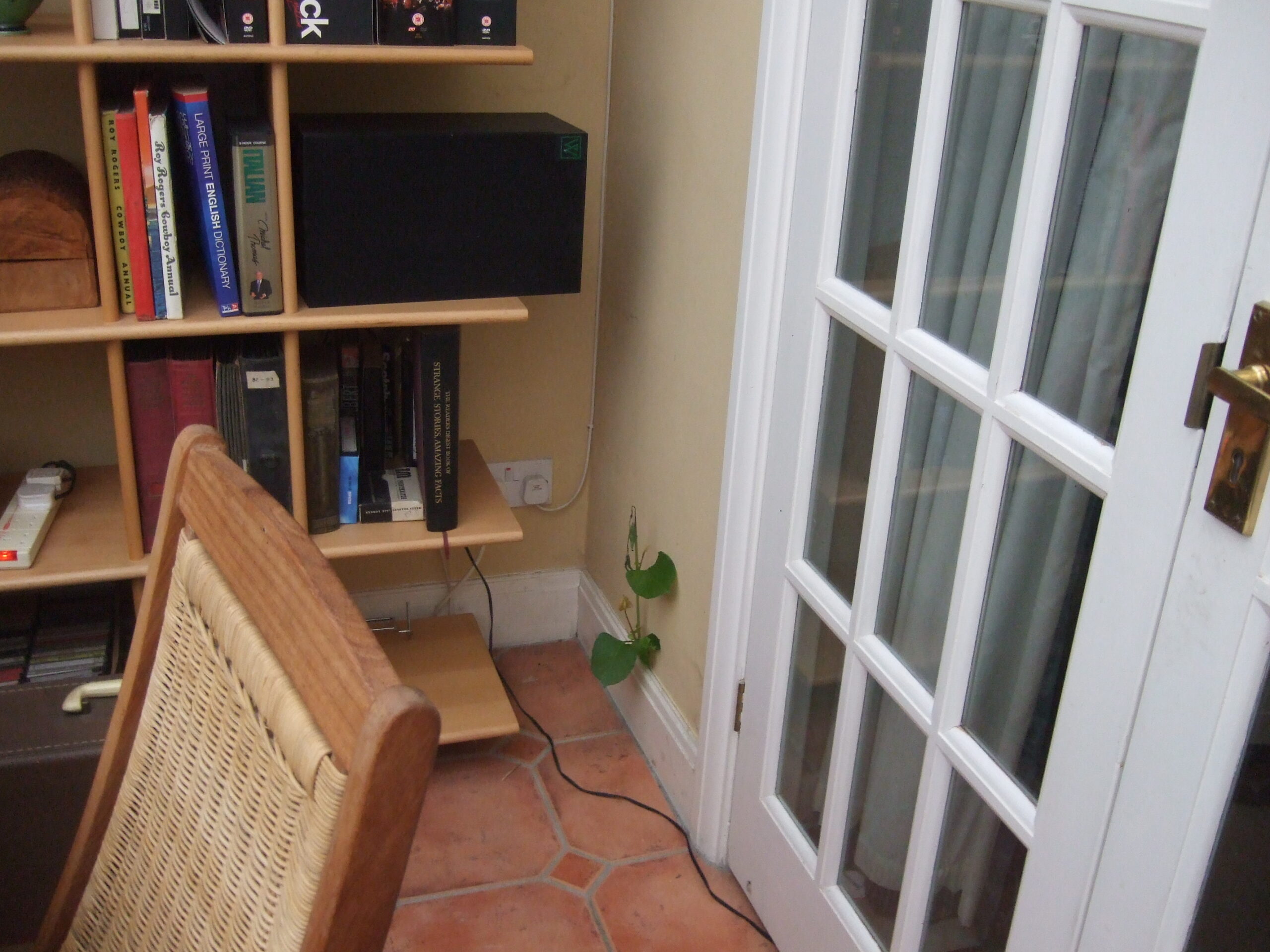
If you’re concerned about damage to building foundations, you need to understand the actual mechanism of rhizome growth.
Japanese knotweed rhizomes can indeed exploit existing cracks, gaps and weaknesses in concrete, tarmac, brick mortar and other built structures. However, the primary threat comes from the density and persistent growth pressure of the rhizome network as it grows into cracks and prises them apart over years, rather than being able to directly penetrate solid structures and foundations.
The rhizomes grow along paths of least resistance. If there’s a thin crack in your patio or a gap where a drain pipe enters your foundations, rhizomes can exploit these vulnerabilities, gradually widening them over time.
The cumulative effect of this persistent pressure can cause genuine structural damage. This is a real risk, but it’s based on exploiting existing weaknesses rather than the plant actively demolishing sound construction.
Japanese knotweed rhizome fragments regrow with remarkable efficiency. A new, viable plant can regenerate from a fragment as small as 1cm, weighing as little as 0.01g. This tiny piece of rhizome contains all the necessary material to establish a new colony, making complete physical removal incredibly difficult, as such small fragments can be easily generated and missed when excavating knotweed.
Understanding this is vital when you are handling contaminated soil or plant material. Their longevity further enhances the rhizomes’ resilience. They can remain dormant but viable in the soil for up to 20 years, waiting for favourable conditions or disturbance to trigger growth.
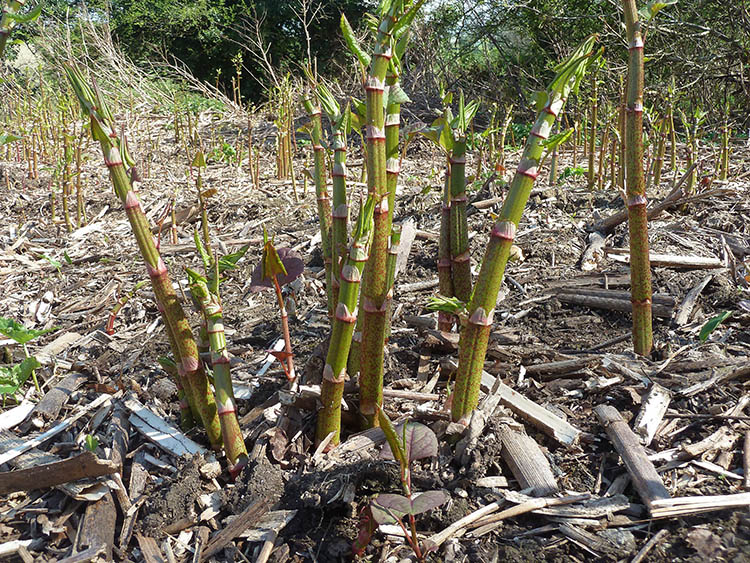
'Asparagus'-like shoots
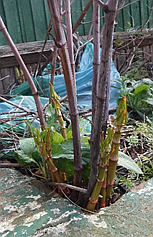
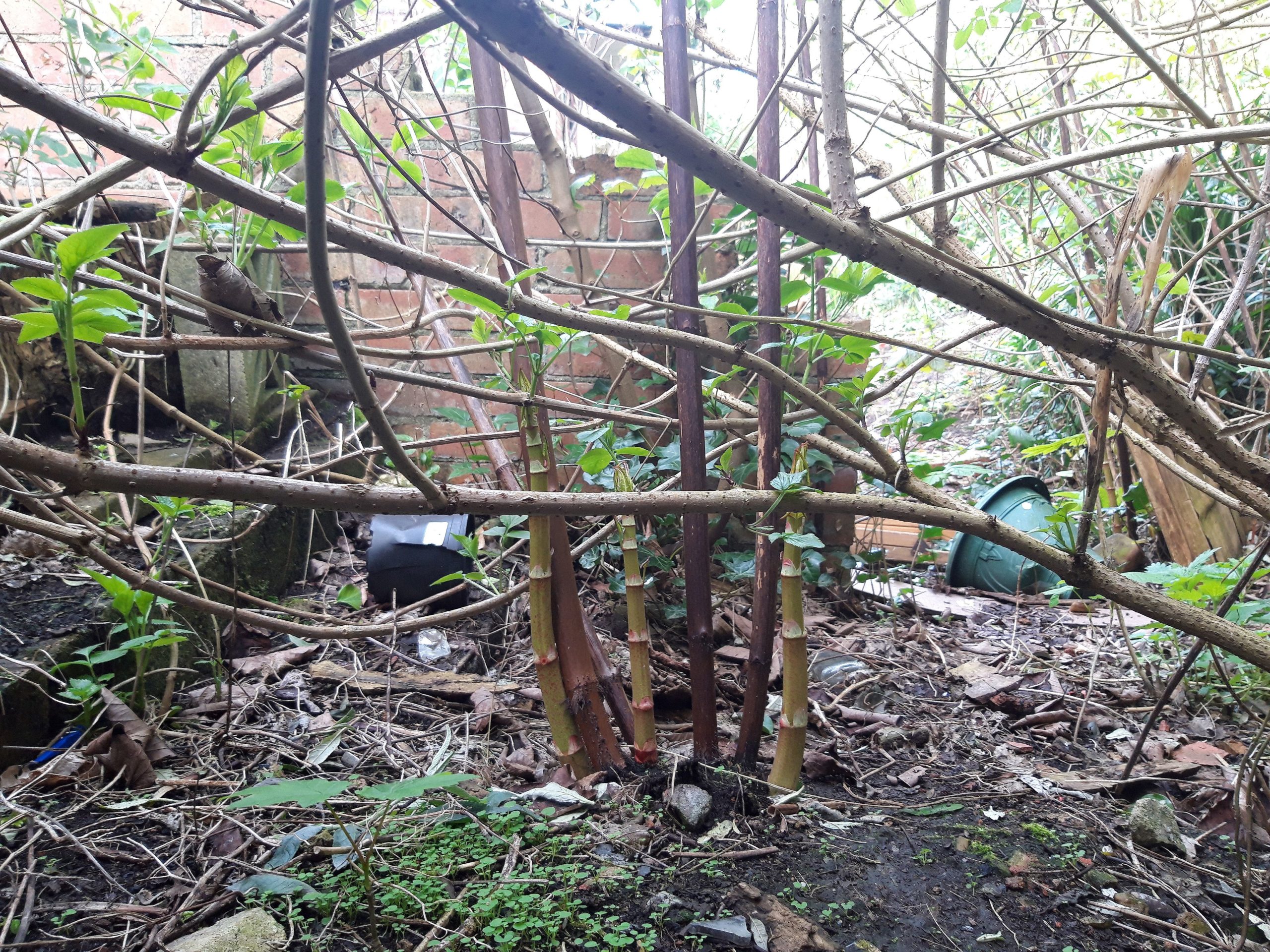
In the UK, rhizome buds typically activate in spring as soil temperatures begin to rise, with shoot emergence occurring between March and April. You’ll first notice reddish-purple asparagus-like shoots pushing through the soil, which rapidly develop into the characteristic bamboo-like stems.
Disturbing or cutting the above-ground growth can actually trigger increased activation of rhizome buds. When you cut down the visible stems, the plant responds by activating dormant buds along the rhizome network, often resulting in multiple new shoots appearing where there was previously just one.
This is why proper disposal methods, such as prolonged drying on impermeable surfaces or burial at licensed facilities under controlled conditions, are effective. The rhizomes must be deprived entirely of moisture for an extended period in order to kill them.
A strategic approach is needed to eradicate Japanese knotweed rhizomes. The underground network is the true heart of the infestation and your elimination method must address this hidden threat. Multiple proven approaches exist, each with distinct timelines, costs and suitability for different situations. The key is matching the method to your site constraints, budget and urgency.
For permanent, immediate eradication, complete excavation by a PCA-qualified Japanese knotweed contractor is the most reliable method. The process involves the complete removal of all rhizome-contaminated soil to the appropriate depth, typically extending 1 to 3 metres below ground level and at least 3 metres beyond the visible extent of growth in all directions. This excavated material must then be transported to a licensed waste facility, such as a landfill site that is authorised to accept Japanese knotweed waste.
The cost of Japanese knotweed removal for a typical domestic infestation ranges from £4,000 to £20,000 or more, with commercial sites potentially costing considerably higher depending on the scale. These figures include excavation, licensed transport (which is a legal requirement, not optional), landfill disposal fees and site reinstatement.
Alternative excavation-based approaches for commercial sites include on-site burial, which requires constructing a proper burial cell at a minimum depth of 5 metres – a shallower depth of 2 metres can be applied if the waste is sealed with a root barrier membrane. Another option is relocating contaminated soil to a different part of your site for treatment, which can reduce disposal costs but extends the treatment timeline. Some contractors also advocate mechanical sifting or screening methods to separate rhizome fragments from the soil, which can vastly reduce contaminated waste volumes. However, this is delicate work that must be undertaken by professionals, if risks are to be managed properly.
Glyphosate-based herbicides remain the most effective chemical option for permanently killing Japanese knotweed rhizomes; however, you must understand the time commitment involved.
Destruction of the rhizome system typically requires a minimum of 3 years of repeated applications and in many cases, treatment extends to 4 or 5 years for well-established infestations. Professional-strength formulations are essential; standard garden centre products lack the concentration of herbicide needed to penetrate rhizomes.
Timing is critical for herbicide efficacy. For some of the best herbicides, late summer to autumn applications (typically between August and October) are the most effective. During this time, the plant is actively translocating nutrients downward into the rhizome system for winter storage, and some herbicides travel with these nutrients, achieving maximum rhizome penetration. Spring applications with some types of herbicide can also be effective but may require additional treatments to achieve complete control.
Stem injection is another highly targeted method of herbicide delivery. This technique involves injecting the herbicide directly into the hollow canes, where it’s taken up systemically and transported throughout the plant.
Stem injection is unaffected by weather conditions, prevents chemical spread to other non-knotweed plants and addresses pet-safety concerns because there is no surface residue or spray drift.
Self-removal of Japanese knotweed is not a method we recommend because it carries a risk of breaching Japanese knotweed legislation. If you’ve excavated rhizome material yourself, you need to understand the legal requirements.
Japanese knotweed is classified as controlled waste under the Environmental Protection Act 1990. In essence, this means you cannot dispose of it in domestic waste bins, green waste collections, or standard garden waste.
Any excavated material containing rhizome fragments must be:
Burning is not recommended and may be illegal in your area depending on local authority regulations. That being said, burning can be effective. However, in order to completely kill rhizomes, a high temperature is required, which typically cannot be reached in garden bonfires. Composting is absolutely prohibited, as the temperatures achieved in domestic compost heaps are insufficient to kill rhizomes.
Effective Japanese knotweed management begins long before any treatment. The first step is a thorough pre-treatment assessment to establish the full extent of the infestation. For both domestic and commercial infestations, a professional Japanese knotweed survey should be undertaken. Knotweed survey specialists use their knowledge of rhizome spread patterns to map the true extent of contamination.
If herbicide treatment is recommended, the following steps should be undertaken:
The inadvertent spread of rhizome fragments during construction, landscaping, or excavation work is the most common way Japanese knotweed spreads. Even a single 1cm fragment can establish a new colony.
The biosecurity protocols must be rigorous:
For small residential gardens, chemical treatment by a PCA-qualified knotweed contractor is often the most practical solution. Whilst excavation provides immediate results, the costs are often disproportionate for small domestic infestations and the disruption to your garden can be substantial. Even though it’s slower, professional herbicide treatment is cheaper and in most cases will allow you to continue using your garden during the treatment period.
When looking to hire a Japanese knotweed removal contractor, make sure they hold the Property Care Association’s Japanese Knotweed Surveyor and Contractor Qualifications (PCA CSJK). This certification is the UK industry standard and ensures that the contractor:
Treatment backed by insurance guarantees requires PCA-qualified contractors. This is often essential for property transactions, as mortgage lenders typically require evidence of professional treatment with long-term guarantees before approving loans on affected properties.
When evaluating potential contractors, follow this due diligence process:
Professional expertise comes at a cost, but for established infestations, it is the most reliable path to permanent eradication and the only way to obtain the insurance-backed guarantees that protect your property value.
Phlorum is a multi-disciplinary environmental and ecological consultancy specialising in comprehensive Japanese knotweed management across southern England. Our expertise spans from initial identification and detailed rhizome mapping through to complete Japanese knotweed removal.
We offer domestic knotweed removal for those dealing with a small residential garden infestation and commercial knotweed removal for a range of industries, including property developers with knotweed across a development site, as well as services for the construction industry.
Our knotweed team has the qualifications, equipment and experience to provide permanent removal. We offer a free initial consultation to assess your specific situation. If you wish to do so, we can then undertake a Japanese knotweed survey, during which our award-winning PCA-qualified knotweed specialists will:
Beyond Japanese knotweed management, we provide comprehensive environmental services, including ecology surveys, protected species assessments, air quality monitoring and flood risk evaluation. This integrated approach allows us to address Japanese knotweed within the broader context of your site’s environmental requirements, delivering efficiency and value.
Professional help protects your property value, ensures legal compliance with waste disposal regulations and provides the insurance-backed guarantees that mortgage lenders and property buyers are increasingly demanding.