Embodied Carbon Tool: Building Magazine

November 22nd, 2011

image002

Brighton and Hove Council have made it a requirement that all planning applications for new-build residential projects in the city include embodied carbon data.  This is provided by developers when they complete the Council’s online Sustainability checklist.

A simplified version of Phlorum’s embodied carbon tool has been incorporated into the checklist to produce a broad calculation of the embodied carbon in proposed developments. The purpose at this stage is to monitor embodied carbon levels and raise awareness of its importance, and the Council are looking to expand upon this in the future.

So far it is mainly academic bodies that are interested in embodied carbon. But, as the burden of environmental stewardship begins to rest more heavily upon the shoulders of Local Authorities, this could well change very quickly, according to Francesca Iliffe, Sustainability Officer at Brighton & Hove Council, in a recent interview with Building Magazine.

Phlorum team rowing in circles

November 11th, 2011

Rattlechain Lagoon

A Phlorum team has recently had to resort to rowing to get access to Japanese knotweed areas on a site. Fortunately it was a calm day and no one fell in, but as my rowing skills were a bit rusty, I’ll leave it to Glen in the future. It made a nice change from lugging a knapsack around on our backs.

I don’t think the Olympic rowing team will be contacting us any time soon!

Richard

Couple forced to demolish home due to Japanese knotweed invasion

October 24th, 2011
Japanese knotweed invades home

Japanese knotweed invades home

A story in the Daily Mail reports that a couple from Hertfordshire were forced to demolish their £300,000, four-bed home after it was significantly affected by Japanese knotweed growth.

The cost of their new-build home was said to have dropped from £305,000 to just £50,000 as a result of the damaging effects of knotweed, on top of which the house was built.

The couple are suing the solicitors who were dealing with the purchase of the property.

Whatever you think of this story, it’s a frightening illustration that Japanese knotweed is a significant problem that needs to be recognised and professionally dealt with from an early stage of the development cycle.

Sarah Beeny’s Help! My House is Falling Down

August 16th, 2011
Japanese Knotweed Advice from Phlorum on Sarah Beeny Show

Japanese Knotweed Advice from Phlorum on Sarah Beeny Show

Phlorum was recently involved in Sarah Beeny’s Help! My House is Falling Down, a Rehouse TV production for Channel 4 television.

Director, Dr Paul Beckett, and other Phlorum staff were invited to appear on the show offering expert advice on the treatment of Japanese knotweed at a blighted property in South London.

The knotweed problem was caused by a significant amount of growth of this invasive weed in the rear garden of the property.

A focus of the show is on helping homeowners to help themselves to deal with various building disasters. It should be borne in mind that when tackling knotweed on your own the situation can be exacerbated, sometimes catastrophically, if effective controls are not put in place and expert advice is not sought before any treatment begins.

Notwithstanding this, the advice offered by Phlorum allowed the knotweed to be cleared from the property and effectively treated, with significant cost savings to the owner.

Following the first broadcast of the show on 28th August, the feedback we’ve received from our peers in the knotweed eradication world, including surveyors, environmental consultants and contractors, has been hugely positive. This includes the following from a Fellow of RICS:

I thought that overall the way the programme dealt with the topic was balanced and realistic and the important points were made without being too scary or over the top”.

You can catch the episode, and the whole series, on the Channel 4, 4Homes website here.

Please contact us if you would like to discuss any aspect of the show or any issues related to Japanese knotweed.

Embodied Carbon Estimator Tool Launched

July 6th, 2011

B&HCC logo

Brighton and Hove City Council is to launch in partnership with Phlorum Environmental Consultants an Embodied Carbon Estimator Tool, for new housing plans; the first city council to do so.

From the 6th July 2011 the Embodied CO2 Estimator Tool will be included within Brighton & Hove City Council’s 2011 Sustainability Checklist for Planning; the first time any council has adopted this kind of tool as part of planning application requirements. Estimations of embedded carbon will accompany submitted plans for new housing developments.

Use of the Embodied CO2Estimator Tool signals a heightened focus from the city council on the overall carbon associated with developments. Allowing them to go even further in their aspiration to deliver low carbon development.

Brighton & Hove are breaking from the mainstream, as planning authorities usually only focus on carbon emissions resulting from energy use and not the embedded carbon of their construction. Typically, authorities focus on reductions in emitted carbon dioxide as a result of energy use arising from the building’s operation. This is also the focus of building regulations, which are ramping up to deliver zero carbon development by 2016. However, the national approach ignores the carbon emissions resulting from the production of construction materials.

Although Brighton & Hove require low carbon design in terms of energy use in occupation; the tool facilitates a more dynamic approach by estimating the total amount of carbon dioxide emitted during the manufacture of key materials (embodied CO2). As such the tool enables a more comprehensive interrogation of carbon impacts.

The Embodied CO2 tool is a light version of a life cycle CO2 tool that has been developed by key partners Phlorum combined with their development partners, the University of Brighton’s Sustainability Team), whom promoted this as an integral sustainability indicator.

The aim of the tool is to encourage housebuilders to consider the use of lower carbon building materials and components when specifying and designing buildings. This could include higher levels of recycled steel; or timber frame as opposed to concrete. The aim is to facilitate lower embedded carbon construction; an important aspect of Brighton & Hove’s planning policies .

The user is asked basic structural design questions including the approximate size of the development, height and numbers of floors. From this the tool estimates a simplified benchmark based on common housing design specifications given in tonnes of embodied carbon dioxide. The user can then choose from alternative materials specification and construction types to deliver a lower carbon building. With each choice made, the effect of the choice on embodied carbon can be seen.

Feedback from local architects and planning consultants in Brighton & Hove has been extremely positive; with 63% of those trained in the tool stating they thought the new tool would definitely help deliver more sustainable buildings in Brighton & Hove. Adoption of the tool complements and supports Brighton & Hove’s placement within the top three most sustainable cities in Britain, which scored third place in The Sustainable Cities Index 2010.

The tool’s customisation was provided by integral partner and leading environmental consultants Phlorum. Phlorum combined its sustainability expertise with those of Sustainability Professor (Andrew Miller) and his team at Brighton University, in order to develop the tool.

The adoption of this tool heralds Brighton & Hove City Council as pioneers, pursuing the highest standards of sustainability and setting the tone for future housing planning submissions. Ultimately, paving the way for other city councils to follow.

Amy Kennedy – Deputy Leader of Brighton & Hove City Council and Cabinet Member for Planning, Employment, Economic Development & Regeneration:

“It is exciting to introduce this groundbreaking new tool and work with developers to deliver more sustainable buildings in the city. This tool means we can address carbon emitted from the construction of buildings as well as carbon emitted throughout their occupation.

The tool makes it easier for developers to design environmentally-friendly buildings. We already have a great collection of sustainable buildings and this is another step in our ambition to make Brighton & Hove one of the greenest cities in the UK”

Richard Schofield – Director at Phlorum:

“The Embodied CO2 Estimator Tool is a simplified version of our in-house life cycle estimator tool, but it shows a great step forward for Brighton & Hove City Council as a beacon council in the step to reduce the embodied carbon in our buildings.”

Notes for the Editor

Phlorum is a leading, Sussex based, environmental consultancy. Phlorum provide specialist multidisciplinary environmental solutions to support the public and private sector, assessing any environmental challenges affecting their business.

Phlorum is managed by Paul Beckett, Director and Richard Schofield, Director, and has been in operation since November 2003.

Key services within the environmental consultancy portfolio include; sustainability in developments, air quality reporting, ecology assessments and Japanese knotweed eradication.

Phlorum are BS OHSAS 18001, ISO9001 and IS014001 accredited.

If you require further information please contact ust:

01273 704449 or email: info@phlorum.com

Invasive Species Guidance from Plantlife

April 7th, 2011
Invasive species guidance from Plantlife

Invasive species guidance from Plantlife

Invasive non-native species are considered a threat to biodiversity. They can cause damage to natural habitats and they compete with other plants for light, space and nutrients and often suppress native species. There is a financial cost to the economy too as substantial amounts of money are spent on containing the spread of invasive species and limiting further damage.

Plant life is a conservation charity that works to protect plants in their natural habitat and promote their conservation benefits to the wider public. In 2010 they published the report ‘Here today, here tomorrow? – Horizon scanning for non-native plants’.

The first part of the report profiles 20 ‘Sites in Peril’ in the UK that are already being threatened or being damaged by non-native plants. An example of a ‘Site in Peril’ is Lundy Island. Invasive species can be particularly damaging to eco-systems when they have developed in isolation.  Rhododendron is a threat to the Lundy Cabbage and is being managed by an eradication programme.

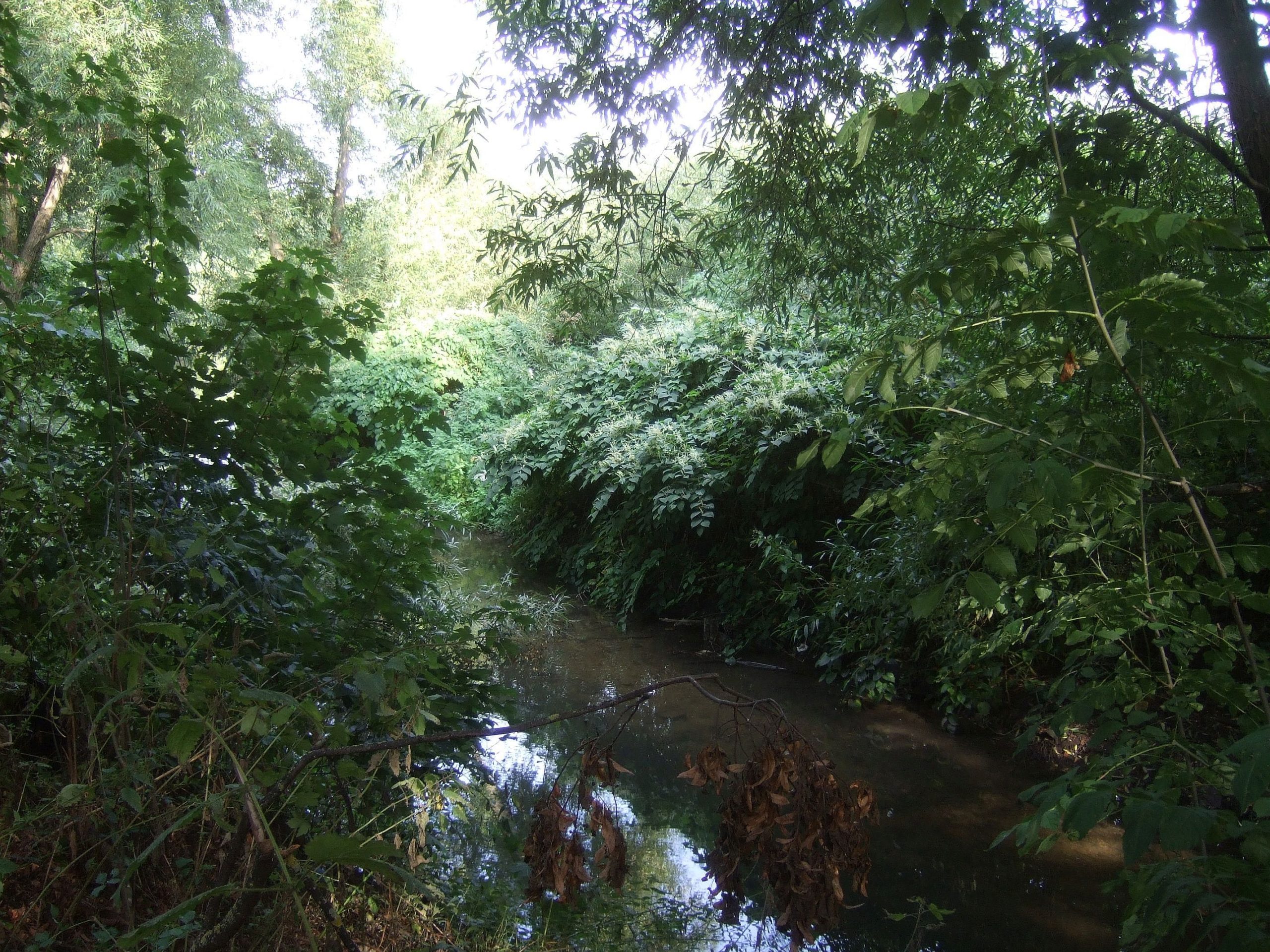
The second part of the report describes research being undertaken to try to identify non-native plants that may become invasive in the future. Examples include Himalayan knotweed; false-acacia; holm oak, and tree of heaven. Himalayan knotweed is still present in some gardens and nurseries. It grows up to two metres tall like Japanese knotweed and becomes established on stream sides, woodlands edges, roadsides, railway banks and waste ground.

Currently the invasive plants that cause the most damage to conservation sites and development sites are:

If you are having problems with invasive species then please contact us at Phlorum. We would be very happy to help. Email or call us on 01273 704449.

Japanese knotweed: New High Yield Biomass Energy Source

April 1st, 2011
Japanese knotweed CHP plant

Japanese knotweed CHP plant

Scientists are reporting today that Japanese knotweed (Fallopia japonica) could hold the answer to the Peak Oil crisis and provide a sustainable, clean source of energy to generate massive amounts of electricity in huge knotweed biomass power stations.

Extracts from Japanese knotweed rhizomes have been used in traditional Chinese medicine for centuries. Compounds such as resveratrol, which are derived directly from knotweed rhizomes, have been proven to cure many ailments, from baldness to heart disease and cancer.

Incredibly, scientists have found that the powerful antioxidant and health giving compounds in knotweed rhizomes, such as resveratrol, are also responsible for the plant’s ability to generate massive amounts of energy. And it is from the capturing and release of this energy in combined heat and power (CHP) plants that has generated excitement amongst the scientific community and governments keen to increase their targets for the delivery of sustainable, biomass electricity.

Tests in Norfolk have shown that by pyrolysing knotweed rhizomes in low temperature ovens, the gas and hydrocarbon fuels generated are only slightly lower in yield than some brown coals. Due to the impressive rate of growth of knotweed  it is hoped that huge swathes of the Norfolk and Suffolk flatlands can be converted into knotweed fields that can be cropped and turned into fuel for a number of massive power plants along the eastern seaboard.

Enough energy should be generated in just a few years to power the enormous demand for electricity in London. It is also hoped that the huge amount of heat generated from the knotweed could be used to crack seawater into hydrogen and oxygen molecules that could then be used to power fuel cell hubs and vehicles in urban areas.

Mortgages still being refused because of Japanese knotweed infestations

March 14th, 2011
For sale signs

Last year the Telegraph reported that house sellers had been forced to spend thousands of pounds eradicating Japanese knotweed from their land after finding their homes had become virtually unsellable because potential buyers were being turned down for mortgages.

At Phlorum we are increasingly being contacted by home buyers affected by Japanese knotweed who are reporting that mortgage lenders are insisting that they will only approve an application if the Japanese knotweed on the property is removed by a professional.

Having had discussions recently with HSBC and a few of our contacts in the mortgage sector, it seems that many lenders are still resolutely refusing to lend on any property that has been identified as being affected by Japanese knotweed.

Those lenders who are more likely to lend on properties affected by Japanese knotweed will generally only do so after considering a valuer’s comments, but usually, if knotweed is mentioned, they will not want to lend.

One area lenders will definitely not lend where knotweed is present is for Buy-to-let Mortgages.

Natwest and HSBC seem to be the most amenable lenders where Japanese knotweed is concerned. If a surveying valuer’s comments suggest that the knotweed could effectively be treated, then they will seek to deduct the cost of this from the value of the property. However, they will still want some form of guarantee or warranty once the knotweed has been cleared.

Further information on identifying and treating Japanese knotweed can be found here.

We would be interested to hear if you have any experience of mortgage lenders refusing to lend on properties affected by Japanese knotweed. Email or call us on 01273 704449.

The Growing Importance of Life-Cycle Assessments for Sustainable Building

February 25th, 2011

lifecycle-diagram08

Meeting targets to reduce carbon emissions by 2050

Carbon emissions from operating our buildings account for nearly half of the 550 MtCO2 emitted annually in the UK, and must be tackled if we are to meet the target of an 80% reduction in emissions by 2050.  The mass roll-out of refurbishment measures is crucial in addressing emissions from existing stock, whilst the energy efficiency demands of new buildings are steadily increasing.  By 2016 for domestic properties and 2019 for others, all new buildings will be required to be ‘zero-carbon’ in operation.

Built to 2010 regulations, emissions from the construction of a typical masonry dwelling account for around 20% of associated carbon emissions over its life; by 2013 this will be more like 50%, and by 2016, all emissions associated with a dwelling will be embodied within the manufacture and transport to site of construction materials. It is crucial that we start assessing and taking action to minimise these emissions now.  At present, there is little legislation to promote the assessment of life-cycle emissions, although some guidance exists on methodology, most notably in the form of BS EN ISO14040/14044 and PAS2050.

Choosing Sustainable Materials

Assessment of the carbon embodied within a building project must occur both in the design and construction phases.  This is to allow feedback to practitioners on the accuracy of their predictions.  In design, a tool exists that can consider both simple and more complex designs, assessing an array of scenarios and making recommendations on how best to minimise embodied carbon.  Suggestions may include increased use of timber, waste product in cement production, or the sourcing of locally manufactured prefabricated components. It is clear that the use of renewable, recycled and local materials improves the environmental credentials of a development, but it is useful to quantify this benefit.  Life expectancies of different materials should also be accounted for.

Ideally, responsibility for data collection on-site would be allocated to an individual. However, all those involved in construction should be made aware of the process.  Keeping a record of materials delivered is standard site practice, but documentation should be widened to include information of the type of delivery vehicle and distance travelled.

There are well known tools for predicting emissions from operation of a building, including SAP and SBEM in the UK.  These may broadly estimate emissions from initial building services and design but they do not allow for changes in design and specification over a building’s life; it must be acknowledged, however, that this can be an extremely difficult thing to do.

Choice of materials and processes at the design stage will also impact on emissions at decommission.  Many materials can be reused or recycled, and practices such as use of lime-mortar, reduced use of paints and ‘design for deconstruction’ increases their potential. Constructing buildings with longer life expectancies and easily replaceable (yet durable) components reduces life-cycle impact.

Considering the Environment

Considering the environmental implications of materials and design over the life-cycle of a building can reduce emissions in all three phases of its life (i.e. construction, operation and decommission).  With zero-carbon targets fast approaching, such assessment is becoming vital. Developers who realise this will see benefits such as improved environmental credentials of bids for work, clear dedication to the sustainability of their projects, and crucially in the current climate, the ability to ‘outgreen’ their competitors.

Anthony Probert MSc AIEMA

Anthony Probert is Phlorum’s Sustainability Consultant and an expert in the sustainable design of buildings.  As well as a Code for Sustainable Homes assessor, Anthony undertakes SAP assessments, energy statements, renewable energy feasibility studies and life-cycle carbon assessments

1 in 5 not interested in climate change

January 12th, 2011

climate change

Research published to mark the start of the Climate Awards this week suggests that 1 out of every 5 Britons are not interested in climate change, as they believe others ‘are not doing their bit.’

This prompted Lord Anthony Giddens, a climate change campaigner, to speak out and suggest that we need to influence each other to change behaviour, and lead by example.

While the benefits of influencing by doing cannot be denied, I would suggest that the figures do not make such uncomfortable reading. The fact is that although proof of our changing climate has been well-documented, and extreme weather conditions observed, there are still outspoken deniers who suggest that the science is littered with fraud, and incidents of floods, hurricanes and tornadoes have always been with us.

Changing behaviour is always difficult, especially when so many have been enjoying the relative comfort of our cheap fuel and consumer society, where driving, heating, lighting, holidays abroad and exotic foods have been the norm rather than a luxury. To have 4 out of 5 people willing to take action to reduce these luxuries to combat something which is, it can be argued, easy to ignore if need be, seems to me a remarkable achievement and should be promoted as a blow to the deniers.

Climate change campaigners should be cheered by the news. People are sitting up and taking notice. Lord Giddens is right to promote the ‘influence of influence’, but it seems like the ball is rolling and quite soon it will be the voice of the public that will drown out the deniers – we will all be a campaigner.

Anthony