
Call us free on 0808 168 9540
Call us free on 0808 168 9540
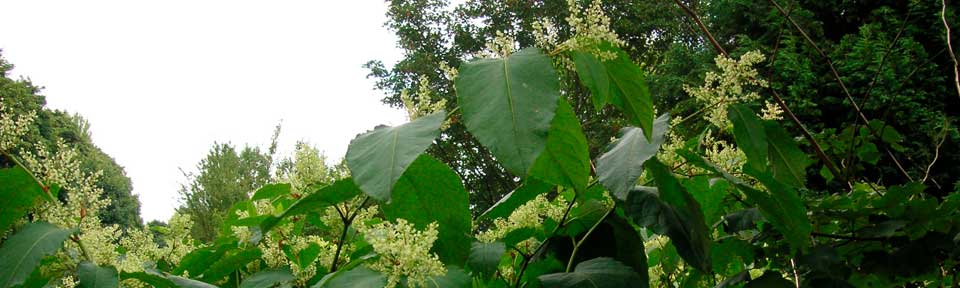
This detailed guide, with pictures, will help you learn how to identify Japanese knotweed throughout the year.
Japanese knotweed identification is not always easy. If a potential infestation is ignored, there could be destructive and costly legal consequences [1].
Our guide will help you to:
Got a plant that looks like knotweed? You may also be interested in our detailed guide to plants that look like Japanese knotweed.
The following video featuring our co-founder, Dr Paul Beckett, one of the UK’s leading experts in Japanese knotweed, provides a clear and detailed guide to identifying knotweed.









The picture above shows Japanese knotweed in full bloom during the latter summer months. One of the most striking features of Japanese knotweed is its distinctive, creamy-white flowers, which appear late in the summer and early autumn [3].
The flowers appear in dense clusters on thin spikes, each around 10cm long. The leaves are relatively large and light green, with smooth edges and a flat base. They form a shield shape and appear alternately along the stems.
Below is an overview of the key characteristics of Japanese knotweed that can help you recognise whether you have knotweed on your domestic property or commercial premises, followed by our detailed Japanese knotweed identification guide.
| Flowers | Japanese knotweed can be identified by its creamy white flowers, which appear on panicles. These panicles are formed of dense clusters of small flowers on thin spikes around 10cm long. Individual knotweed flowers on each spike are around 0.5cm wide. The small, creamy white flowers appear very late in the summer and early autumn. Bees often crowd the panicles, as they provide a precious source of late-season pollen. |
| Leaves | Japanese knotweed leaves are light green and quite large, around 15cm long by 10cm wide. They have smooth edges and a flat base, forming a shield shape, although hybrids have lobes at the base that make them appear more heart-shaped. Leaves are arranged alternately along the stems, unlike in several similar-looking plants with leaves arranged oppositely. |
| Stems | Knotweed stems on mature plants are very tall, up to around 3m. They emerge as clumps of apparently discrete stems from ‘crowns’ where the Japanese knotweed roots (rhizomes) poke up above the ground. The stems' bases can be quite thick, around 5cm in diameter, and they are light green with purple speckles. Rings, or nodes, around the stems resemble bamboo canes, but unlike bamboo, knotweed has hollow stems that are relatively easy to snap. The leafless knotweed stems die back in winter, and the Japanese knotweed canes are brittle, red-brown, or straw-coloured. |
| Roots | Japanese knotweed exists as a perennial network of underground shoots called rhizomes. Thin roots grow from these, supplying the rhizomes with water and nutrients, where starchy energy is stored in the fleshy orange and fibrous tissue. The crowns can be large, often around 40cm in diameter, with thick (often around 3cm in diameter) rhizomes growing from them in all directions. It is often claimed that rhizomes can penetrate 3m into the ground, but this is rare; most are found less than a metre below the surface. |
| Height | Mature knotweed stands can reach over 3m in height and cover vast areas if allowed to spread. |
| Seeds | Most Japanese knotweed in the UK is a clone of the original plants introduced in the mid-1800s. These were all female (actually male-sterile), so there are no male plants that produce pollen to create viable seeds. However, Russian vine pollen can fertilise female Japanese knotweed, resulting in hybrid seeds. Fortunately, this very rarely leads to new plants. The hybrid seeds, known as achenes, are black, very small (approximately 2 mm in diameter), and resemble apple pips cut in half, or tiny buckwheat achenes, to which they are closely related. |
| Origin | Japanese knotweed originates from Japan and nearby parts of south east Asia, including Korea and China, where several other closely related species exist. As with many other species, Victorian plant hunters in the 1800s first introduced Japanese knotweed to the UK, bringing back interesting specimens for botanical gardens and commercial sale. However, it was quickly realised that knotweed could rapidly grow out of control. By the early 1900s, it was not commonly planted anywhere in the UK. |
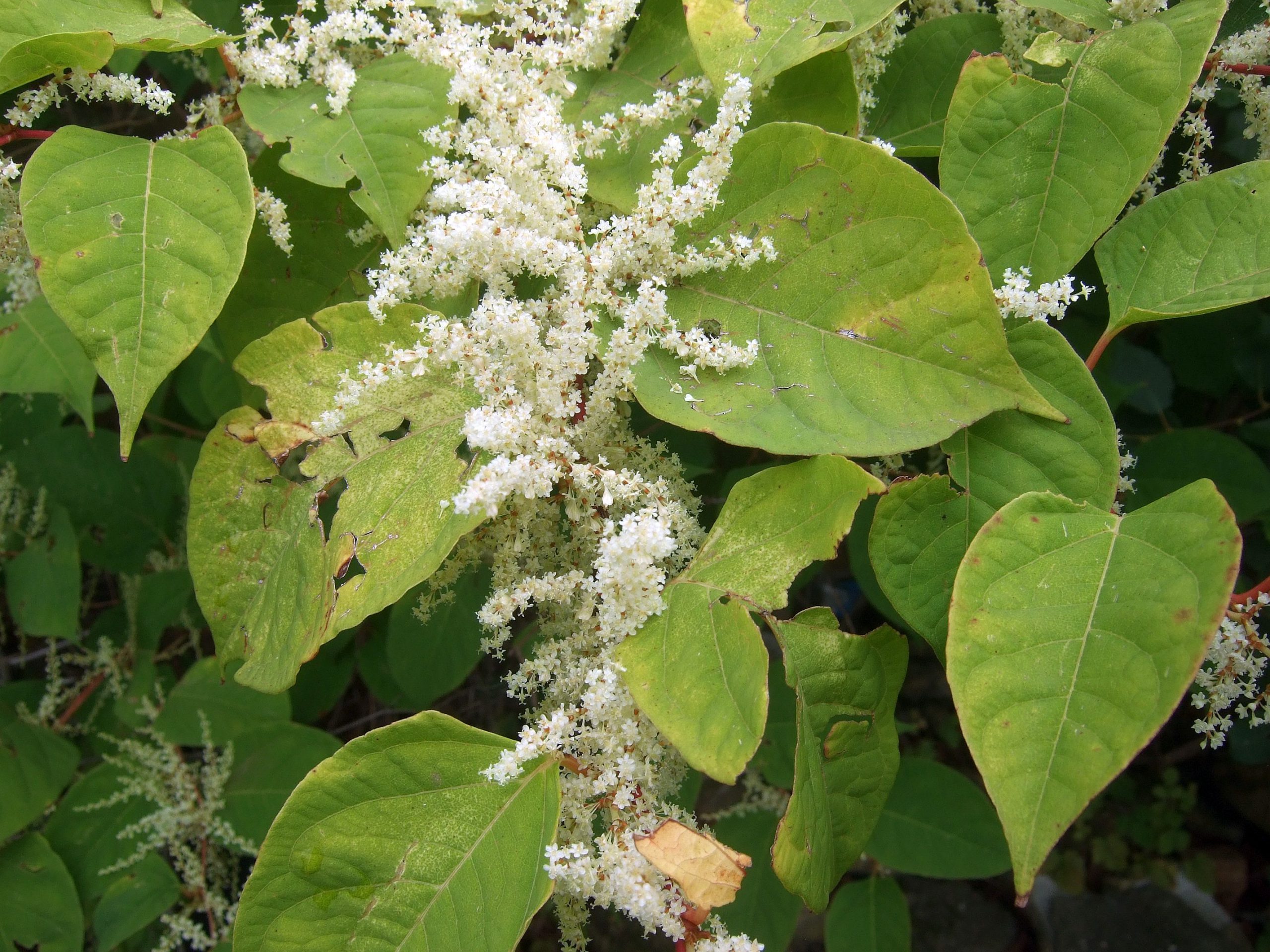
Japanese knotweed flowers
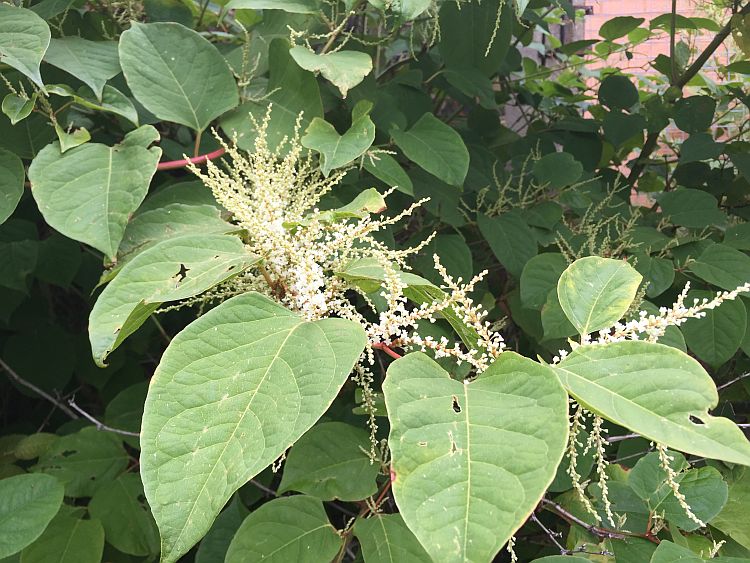
Japanese knotweed flowers
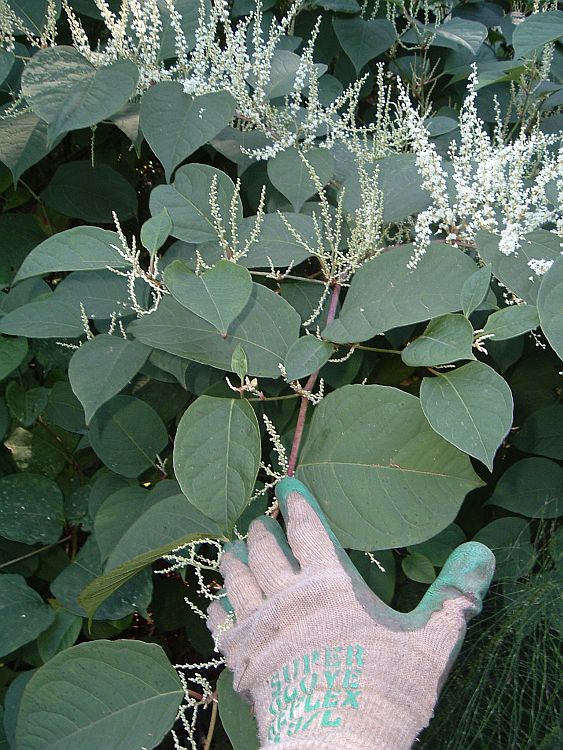
Japanese knotweed flowers
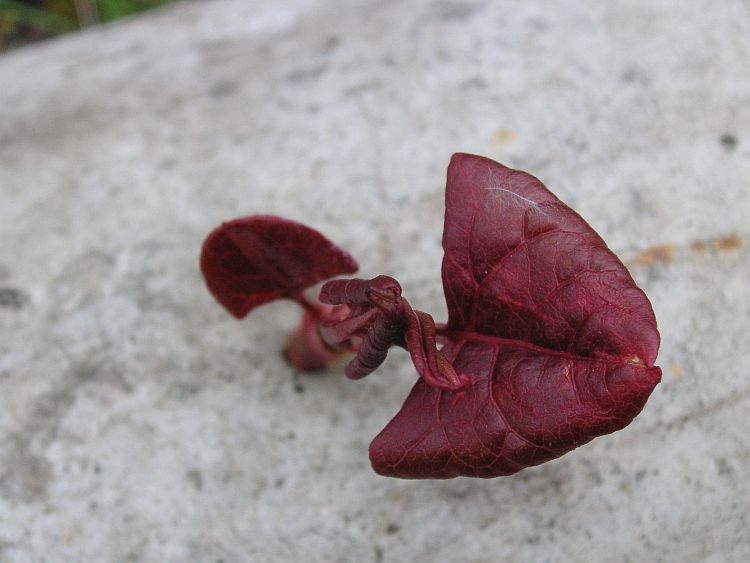
Rolled New Leaf
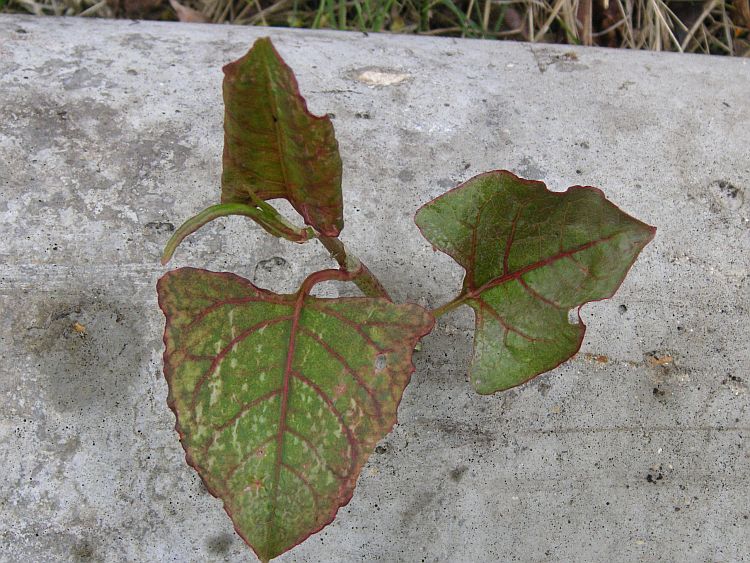
Young leaves
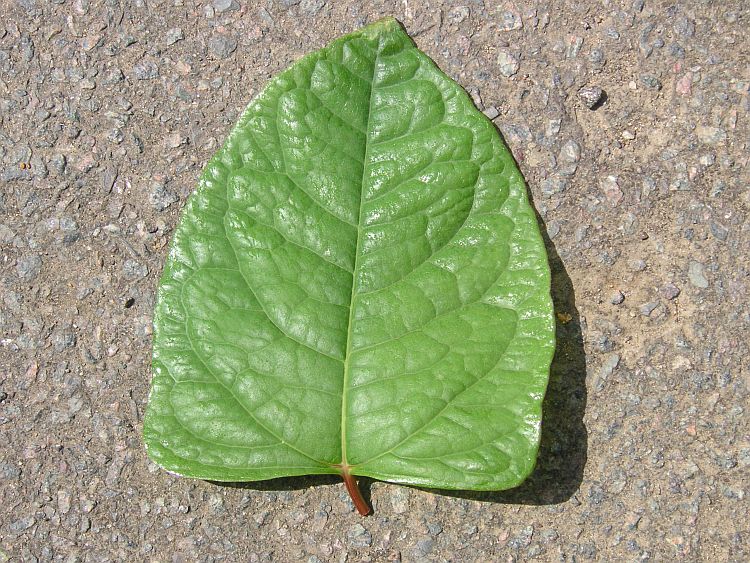
Mature leaf
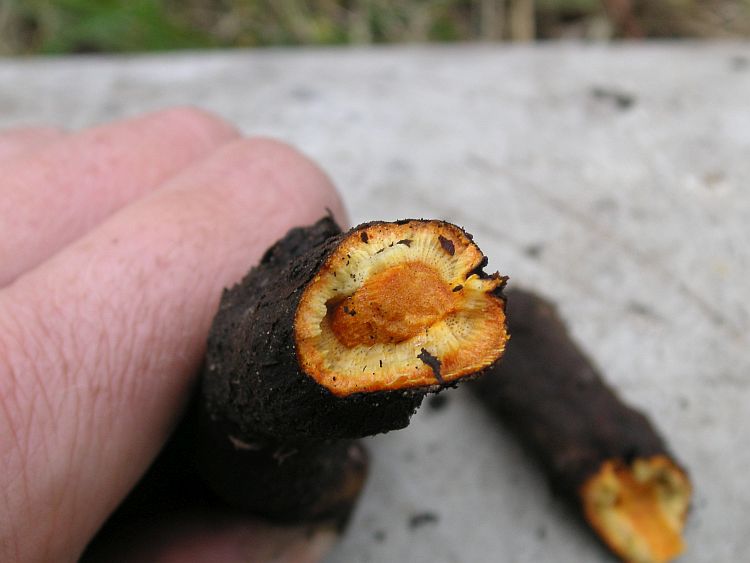
Rhizome
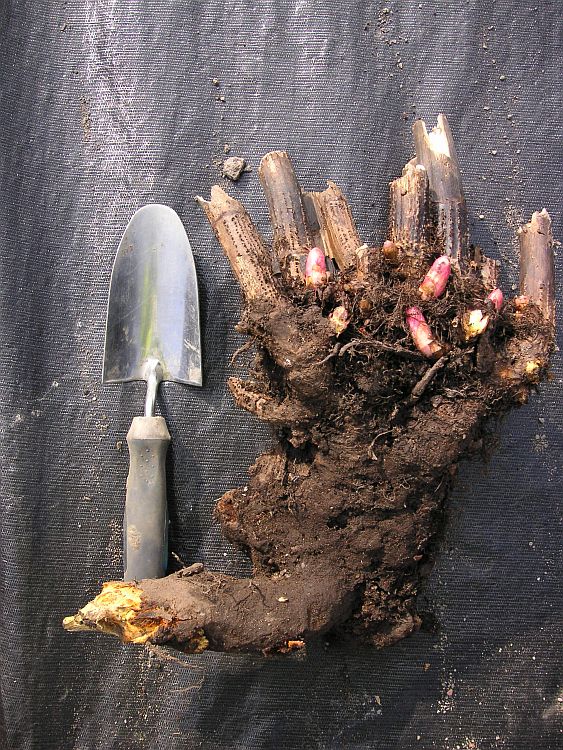
Rhizome and crown
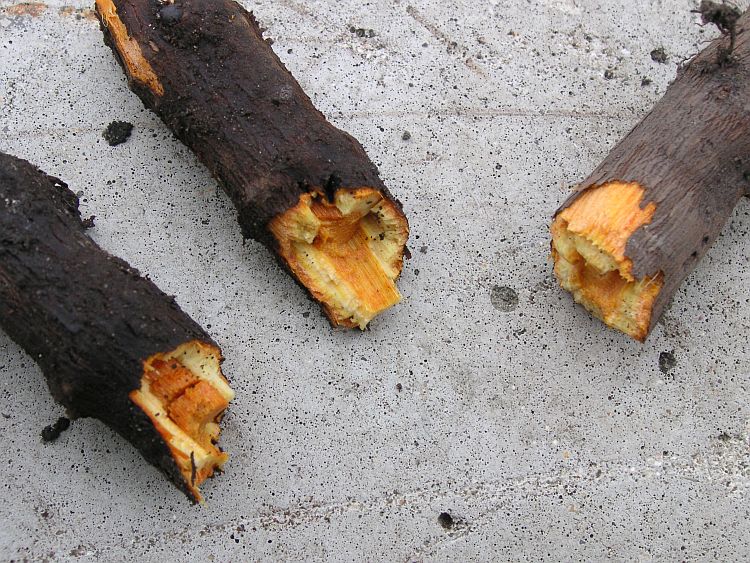
Rhizomes
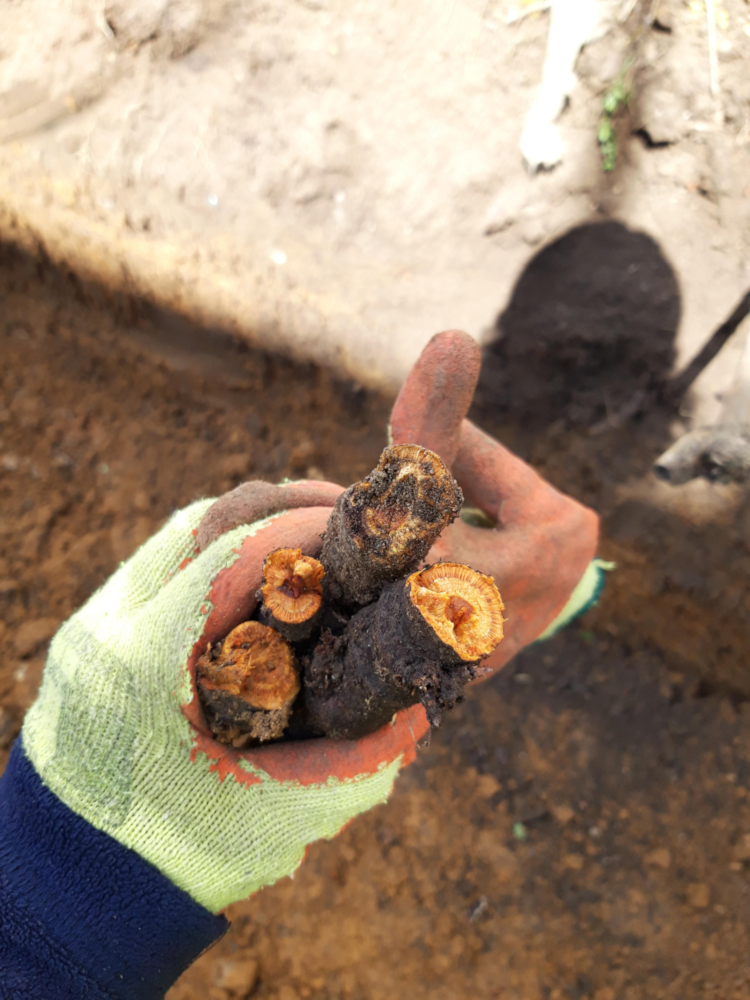
Rhizome
Japanese knotweed spreads through an underground system of rhizomes. These store energy and produce buds that can grow into new shoots. The plant can lie dormant underground for years, making it difficult to remove completely.
Rhizomes usually spread a few metres from the crown, though they can go further in the right conditions. They are commonly found within the top metre of soil but are sometimes recorded at depths of up to three metres. In its native range, rhizomes gradually form rings of new crowns; shoots appear at the outer edge of these rings as the older crowns in the centre die back. These new outer groups can eventually break away, forming separate plant populations.
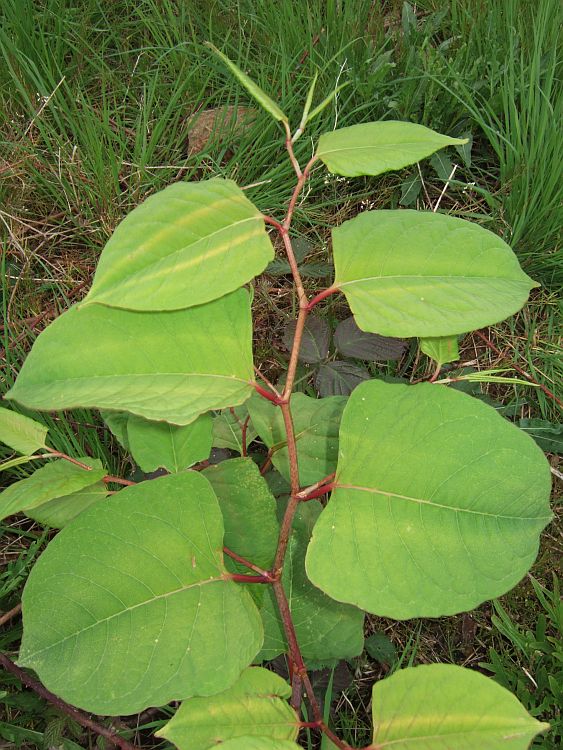
Zig-zag leaf pattern
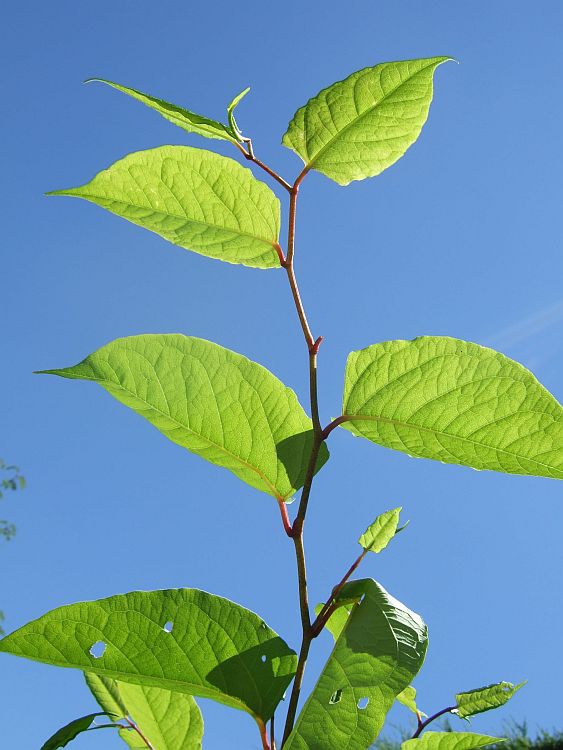
Knotweed shoot and leaves
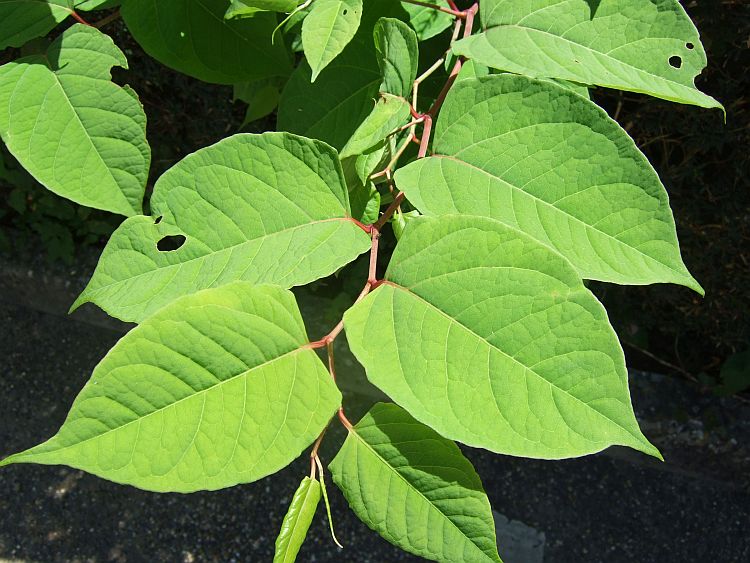
Knotweed shoot
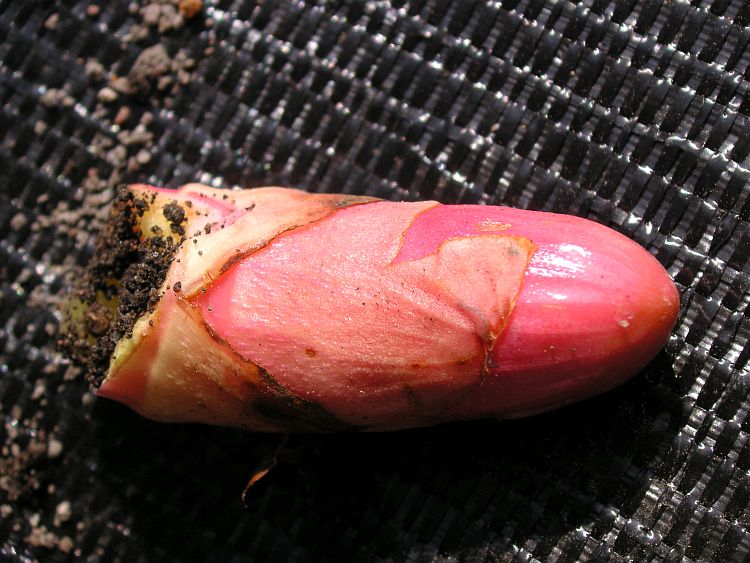
Crown bud
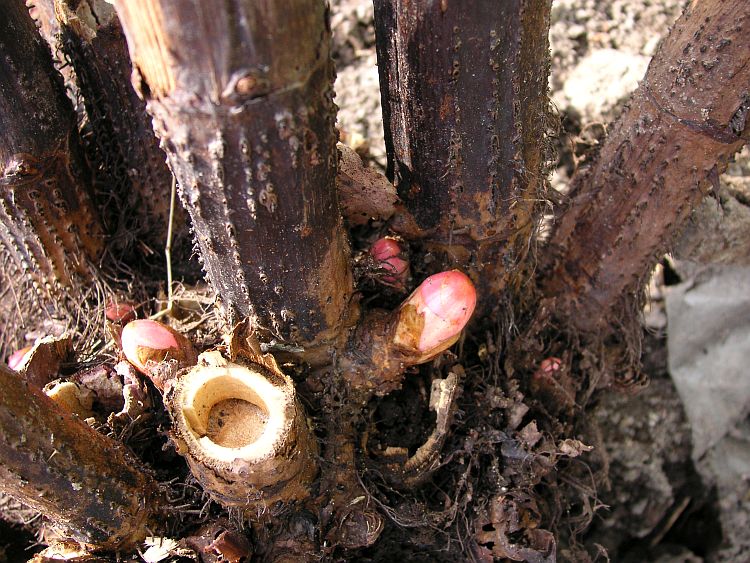
Crown bud
Breaking bud
The following will help you identify Japanese knotweed and its growth stages throughout the year.
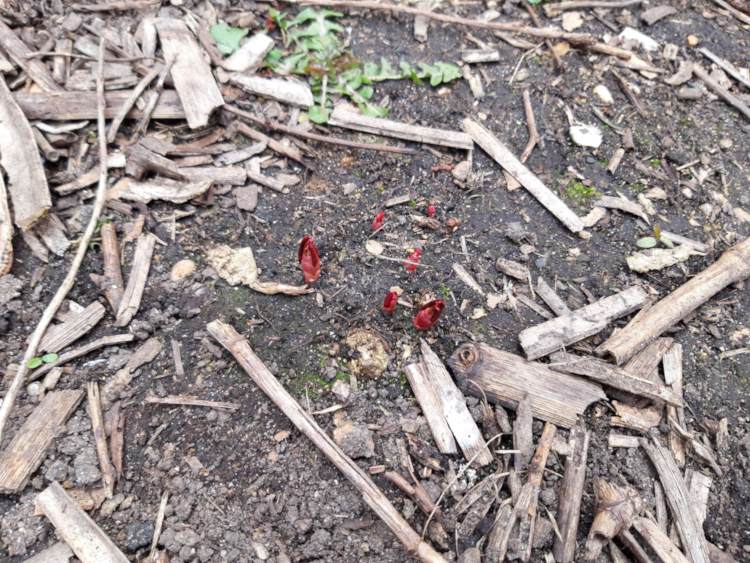
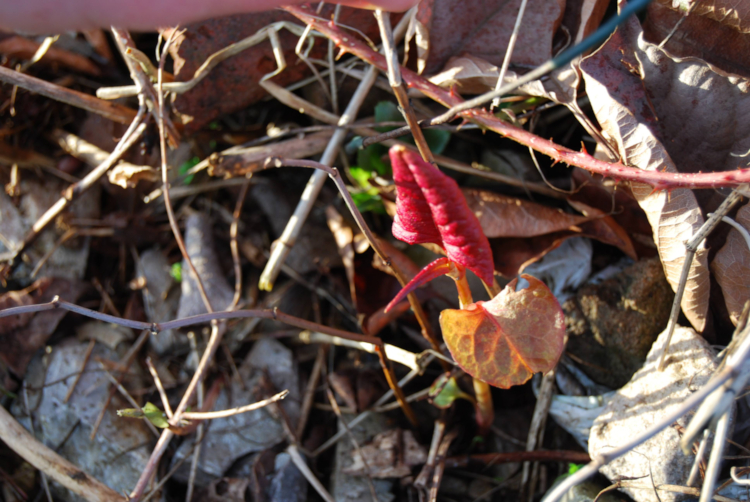
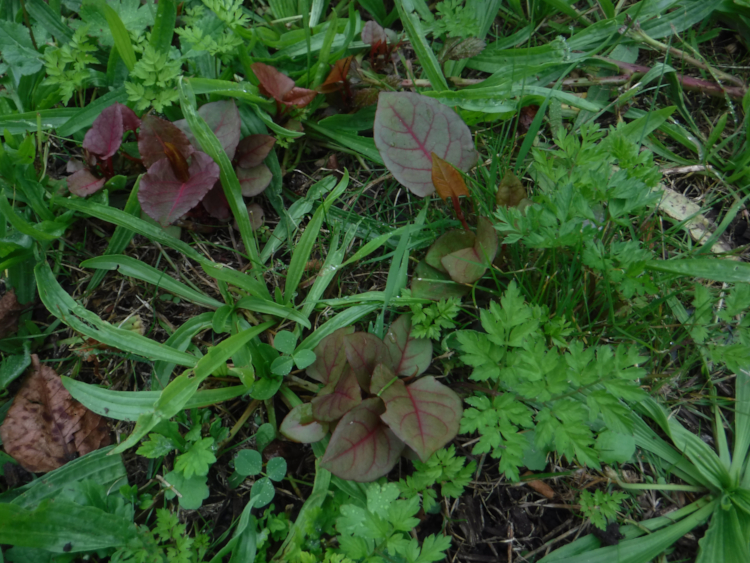
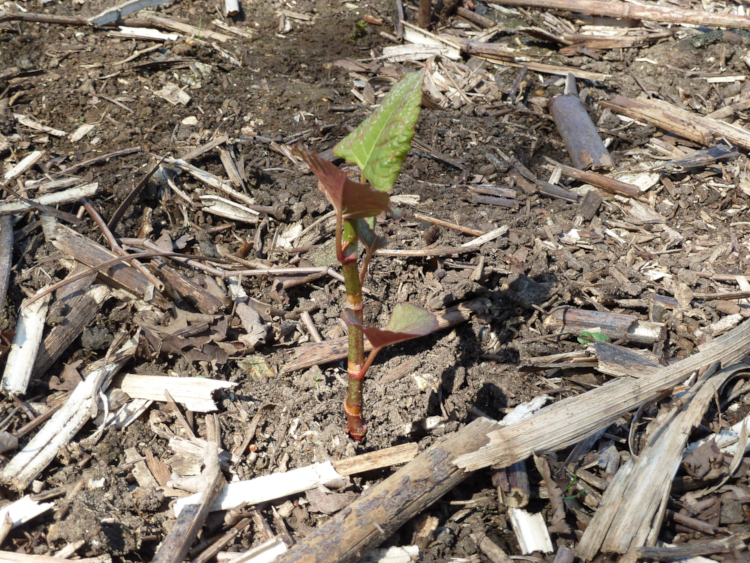
The following describes the early growth of Japanese knotweed:
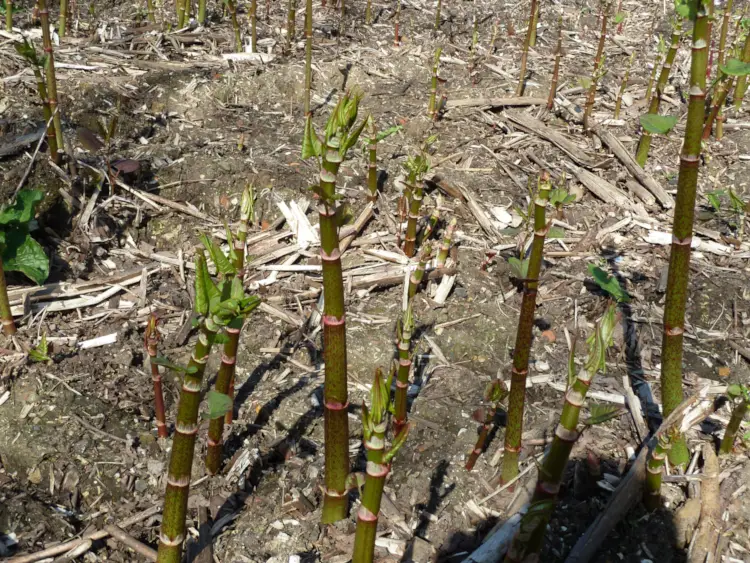
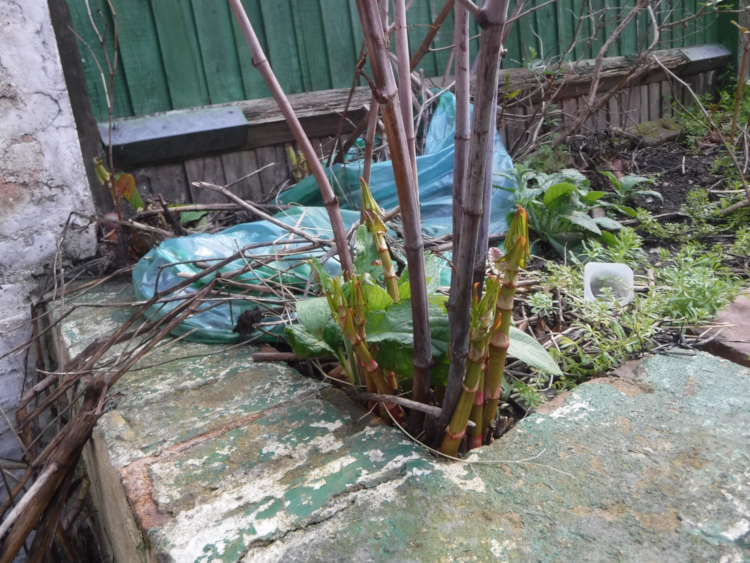
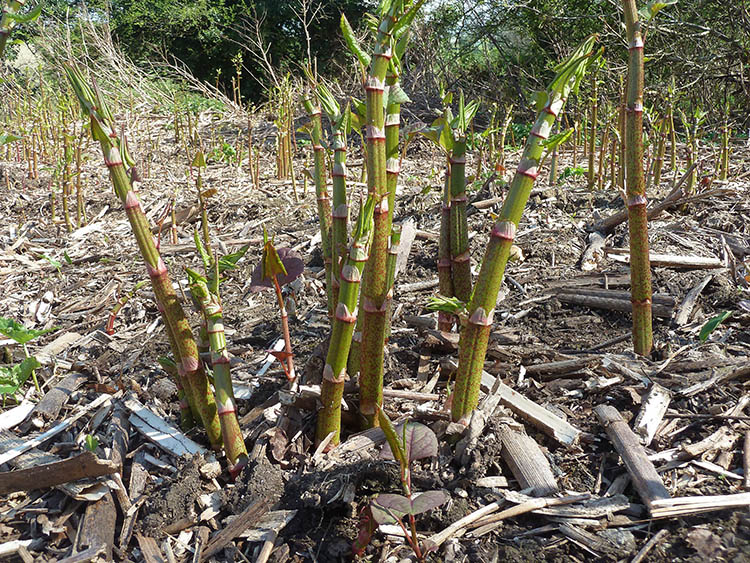
'Asparagus'-like shoots
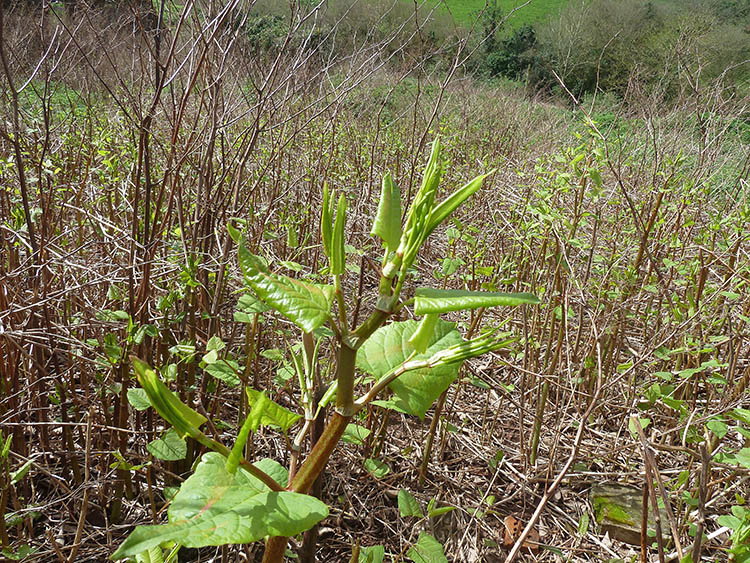
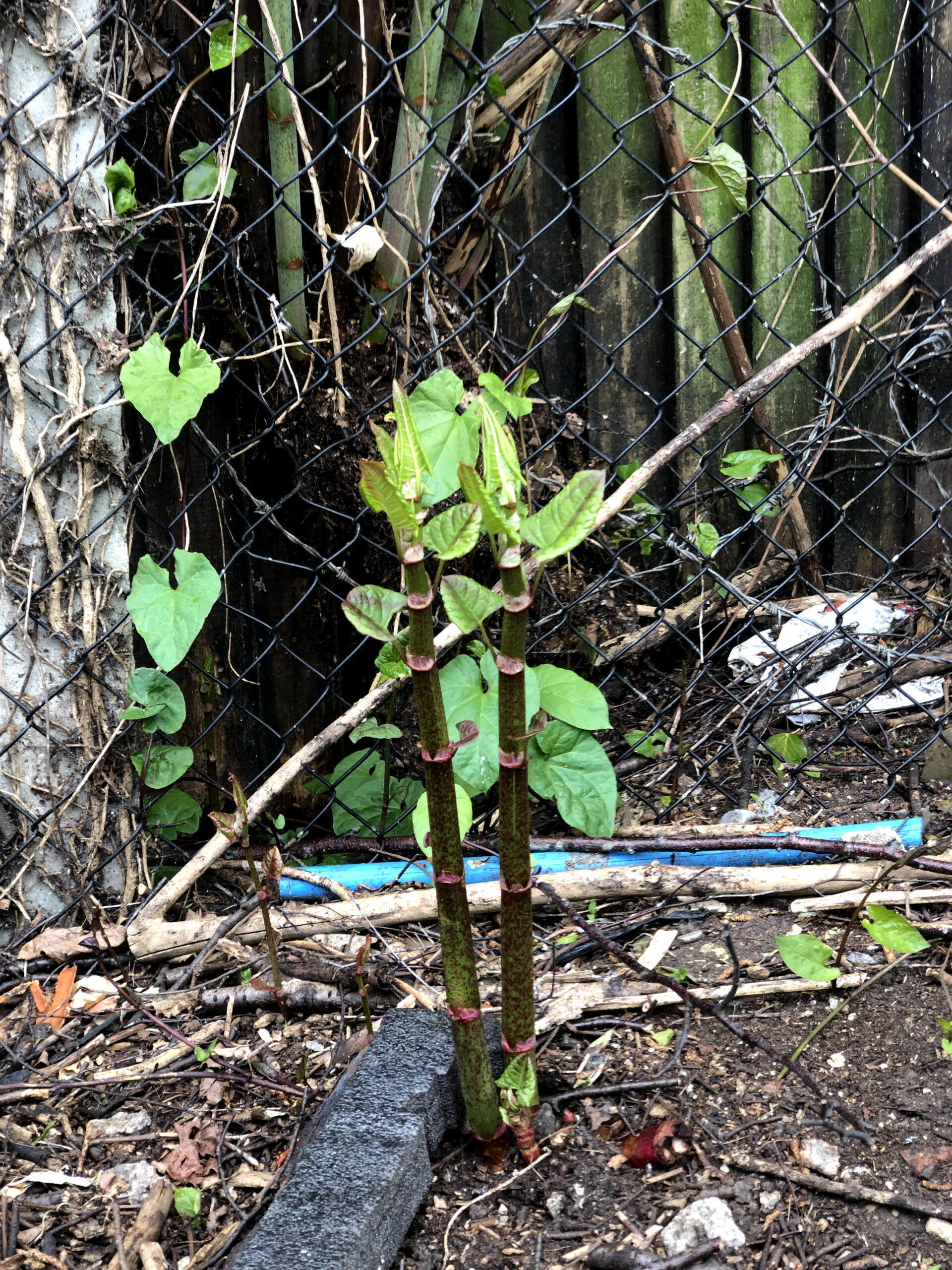
Unrolling knotweed leaves
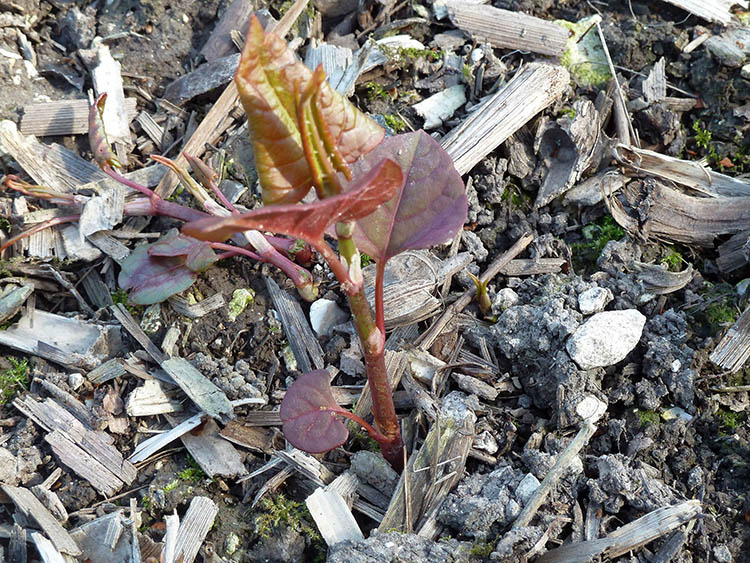
Purple/red shoot
In spring, shoots can appear a few metres from the main crowns as rhizomes spread underground. This can be the first sign that knotweed is growing beyond the visible stand.
Early shoots are easy to spot if you know what to look for. Ones from rhizomes are often dark red or purple, with tightly rolled leaves. These colours, along with the shape, make them stand out from most other spring plants. Pairs of pale stripes can form on some new leaves from the bleaching of pigments on the edges of the leaves as they unroll. Sometimes, these stripes can persist on large leaves into early summer.
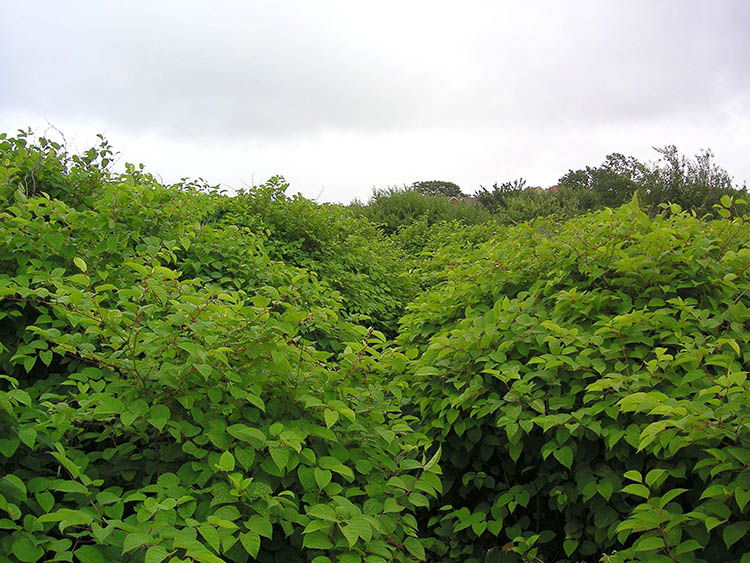
Mature summer knotweed
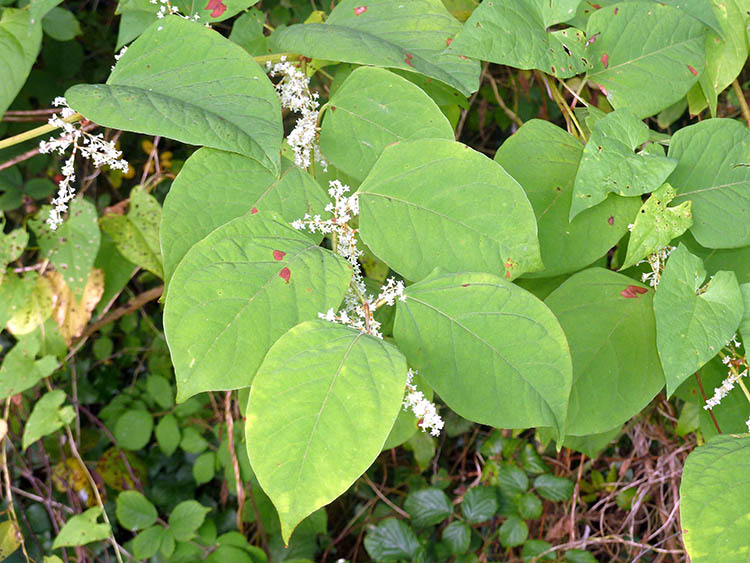
Shoot with flowers
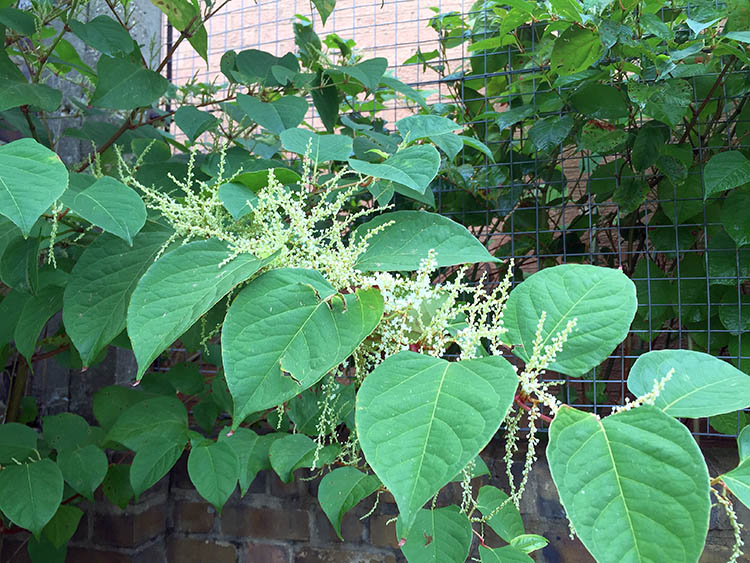
Shoot with flowers
From May to September is when Japanese knotweed reveals itself in all its glory.
The stems can reach over 3 metres, forming a dense canopy of lush, green leaves. The stems provide temporary scaffolding to support the chemical ‘factories’ in the leaves, where they can capture as much light as possible to power food production by fixing CO2 from the air into carbohydrates stored in Japanese knotweed’s rhizomes. As such, no energy is wasted in producing the stems, which are hollow, unlike the permanent, solid stems of woody perennials.
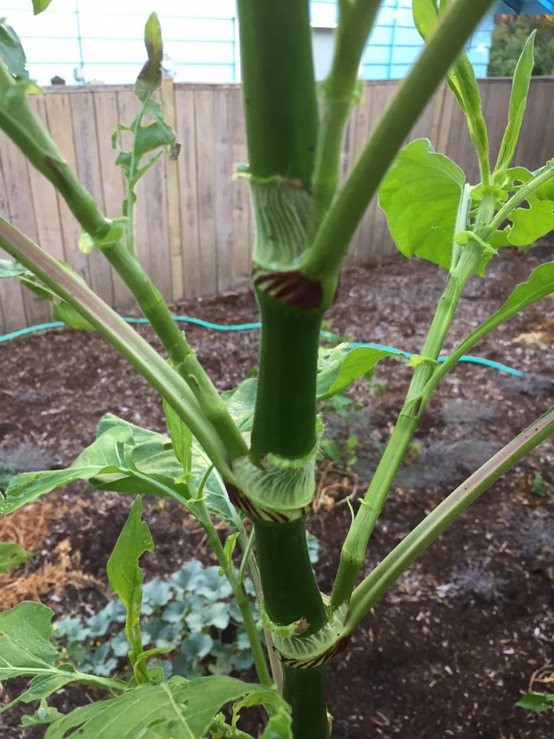
The thicker stems on mature knotweed stands can be 5cm in diameter. Rings, or nodes, around the stems resemble bamboo canes, but unlike bamboo, Japanese knotweed stems can be snapped easily by hand. The purple speckling on the stems also makes them easily identifiable from bamboo.
Another feature that helps with the identification of knotweed is the zig-zag pattern of alternate leaves and side stems, particularly at the tops of the stems. So, too, its late flowering. Few plants produce dense stands of 3m tall stems that flower profusely in September.
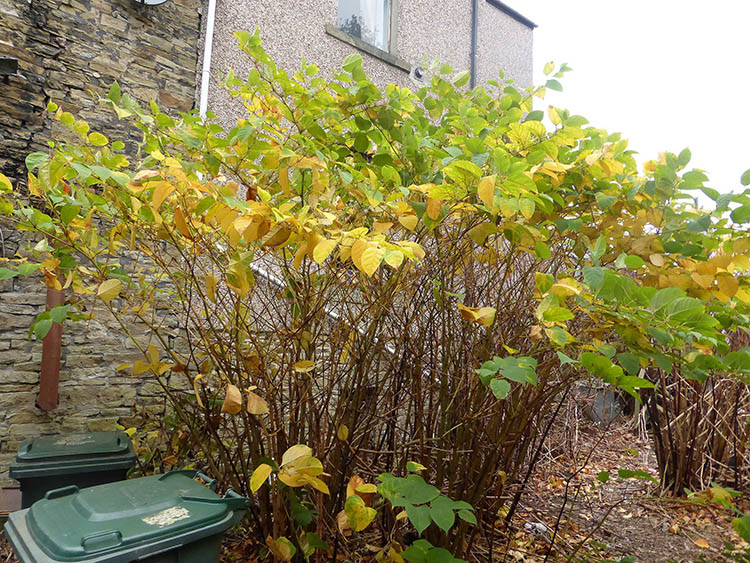
Yellowing Japanese knotweed leaves
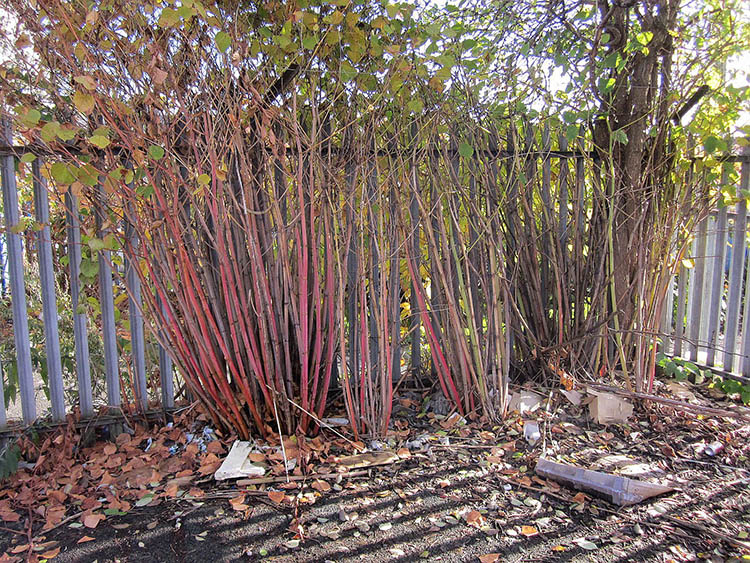
Reddening knotweed stems
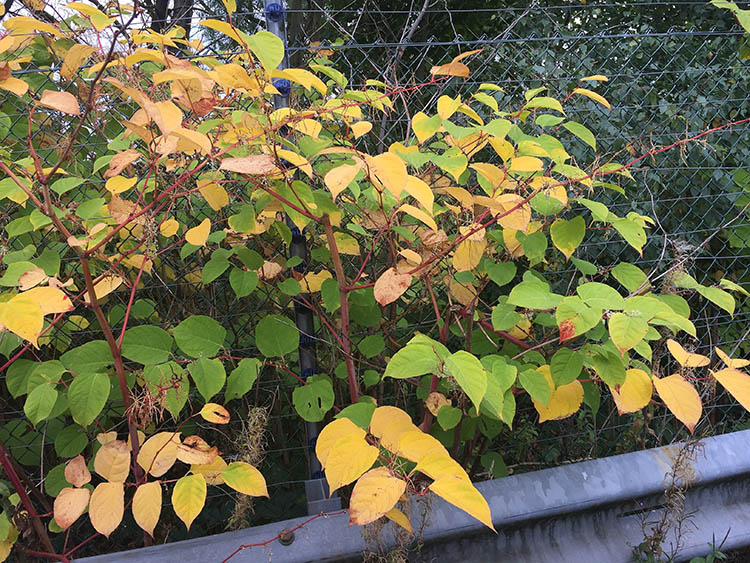
Autumn knotweed colours
Japanese knotweed flowers are often still present in early October at the start of autumn. Some of these will have developed into seeds (achenes – from the pollen of Russian vine, as there are no male Japanese knotweed plants in the UK).
The small creamy white flowers and seeds are arranged in conspicuous panicles. They are shed by the end of October. Japanese knotweed leaves start to turn yellow and then brown about this time. However, if there have been no frosts, leaves can remain on some plants into December, particularly if they are protected from winds. The stems also start to die and become brittle, turning a red-brown or straw colour.
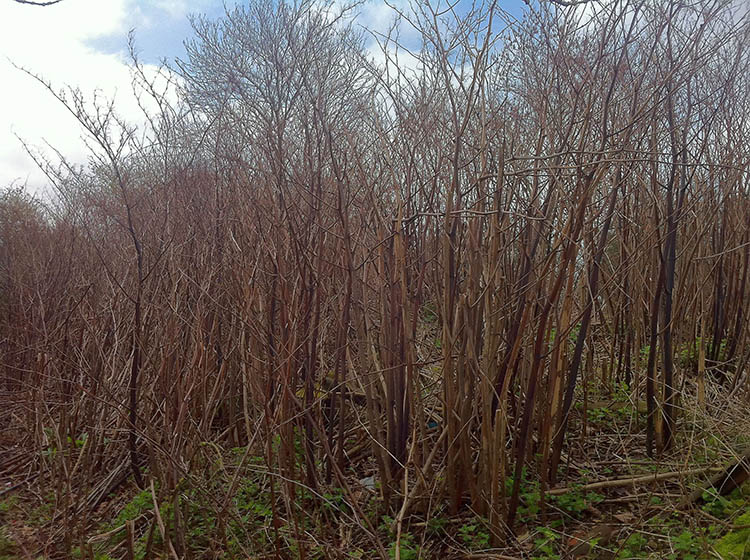
Winter canes
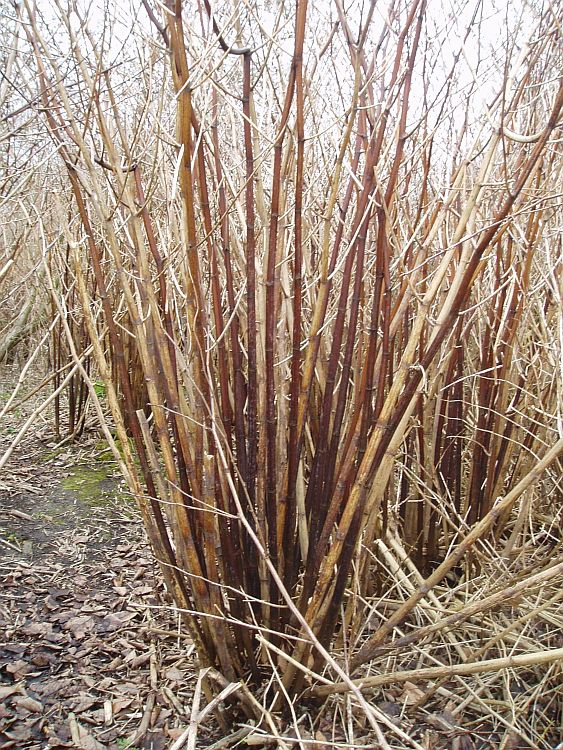
Winter canes
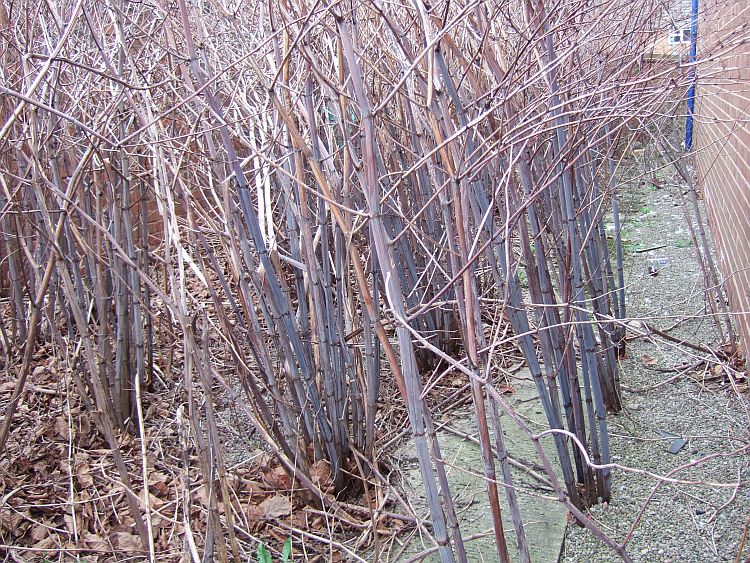
Winter canes
In winter, Japanese knotweed enters dormancy. The leaves fall, and the shoots die back, leaving hollow, straw-coloured stems resembling bamboo. These dead stems are brittle and can remain standing for several years, although they are often brought down by weather or pushed aside by new shoots in spring.
Some knotweed shoots may persist through the winter if the preceding autumn has been mild and frost-free. In rare cases, new shoots may even emerge during winter, particularly in sheltered spots. Green stems have occasionally been observed in such areas as early as February.
As surrounding vegetation dies back, dense knotweed stands often become more visible in the landscape, making winter a useful time for identification.
The best time to spot Japanese knotweed is during mid-summer and early autumn.
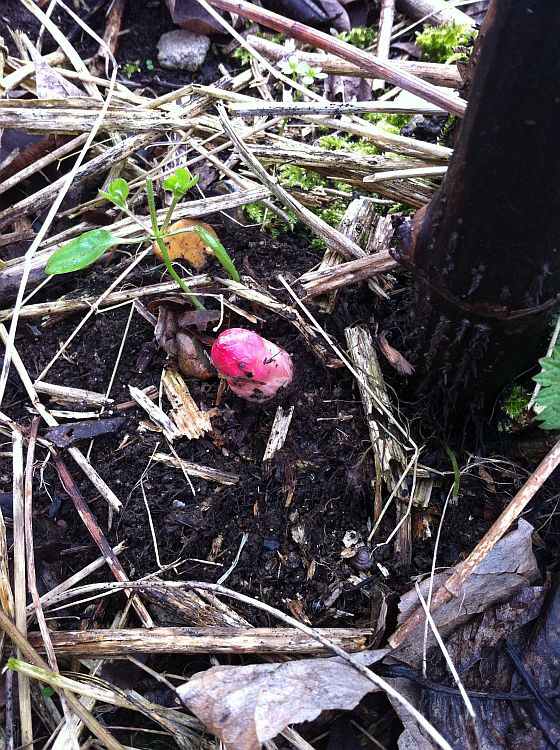
During spring, reddish/purple shoots appear from the ground and fat, asparagus-like ‘spears’ rapidly lengthen from bright pink ‘crown’ buds. These can grow up to 2cms a day, thus rapidly forming dense stands of bamboo-like stems that develop dark green heart- or shield-shaped leaves.
By early summer, the mature Japanese knotweed stems are hollow with purple speckles and can reach up to 3 metres in height. The leaves alternate along each side of the stem, forming an evident zigzag pattern of knotweed. The Japanese knotweed flowers that emerge by late summer are creamy white and appear in long clusters or spikes.
Japanese knotweed spreads mainly from its underground rhizomes/roots, which lie dormant but alive over the winter months [4]. Japanese knotweed rhizomes can spread several metres outward from the visible above-ground stems and to depths of more than a metre.
It is, therefore, very easy to accidentally fragment pieces of rhizome and spread them by disturbing the soil several metres from where the stems appear. This can generate wastes that need to be disposed of properly [5].
As new growth from seeds is very rare [6], it is a testament to the Japanese knotweed’s incredible invasiveness that it has spread to most parts of the UK (and many parts of Western Europe and North America, for that matter) simply through fragmentation and translocation of rhizomes in contaminated soil.
In the right conditions, Japanese knotweed grows very quickly. However, where physical boundaries and competition with more established plants are present, knotweed can appear relatively well-behaved and remain ‘camped on the doorstep’ of a property until or unless conditions change, allowing it to proliferate.
This can happen if Japanese knotweed growing along a dense hedge is freed when the competing hedge or trees are cut down.
Japanese knotweed is very happy in an extensive range of soil conditions. This is why it is so ubiquitous across the UK. It thrives particularly well on marginal land, where a lack of management keeps it in check.
Conversely, various written sources state it is widespread along railways and waterways, where it has been spread by careless vegetation management, such as indiscriminate mowing and clearance works.
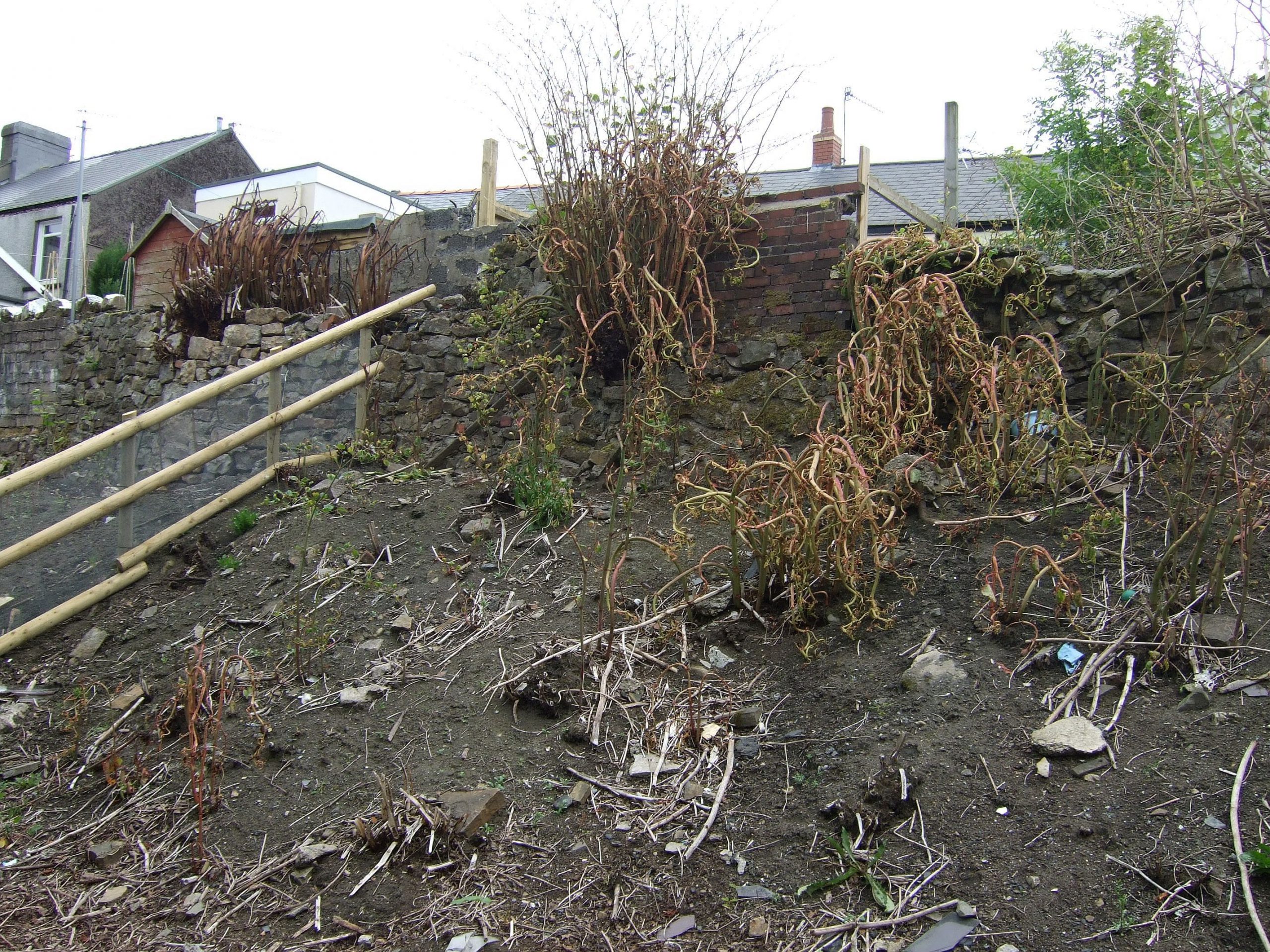
Twisting stems from herbicide effects
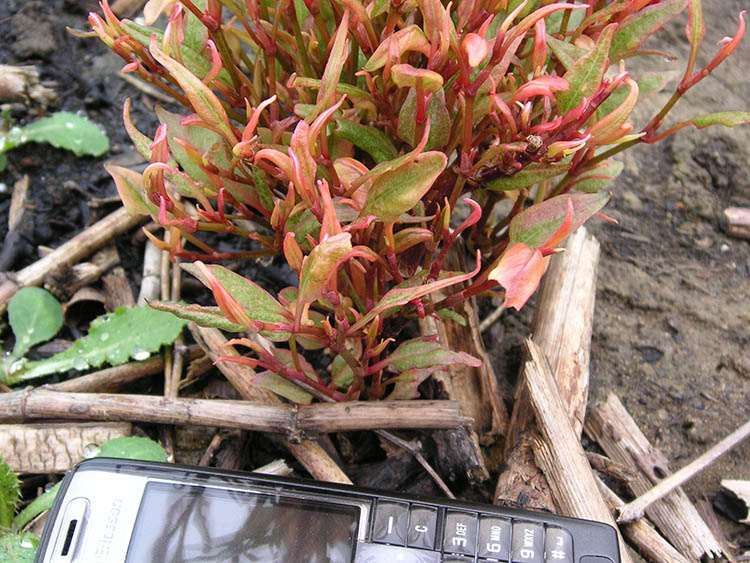
'Bonsai' regrowth
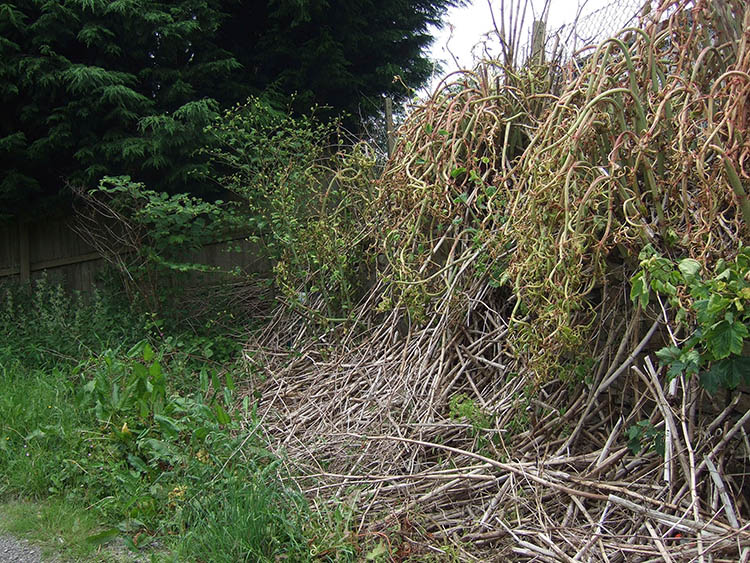
Twisting stems from herbicide effects
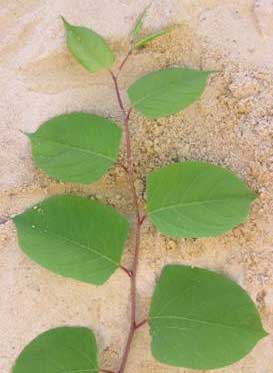
Japanese knotweed leaf
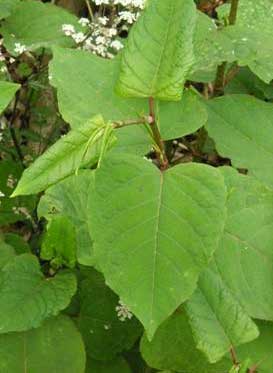
Hybrid Knotweed Leaf
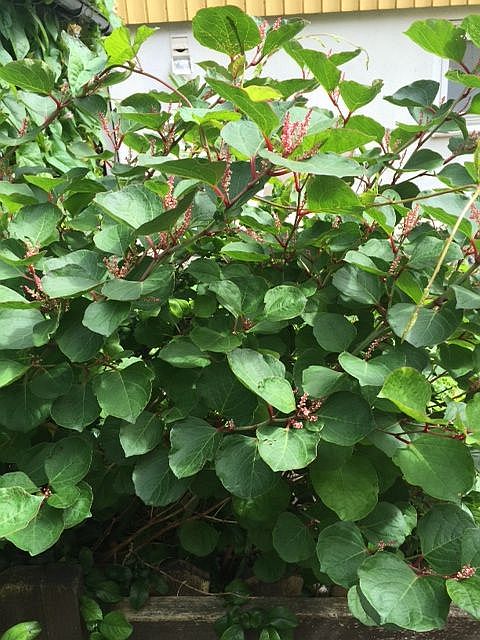
Dwarf knotweed
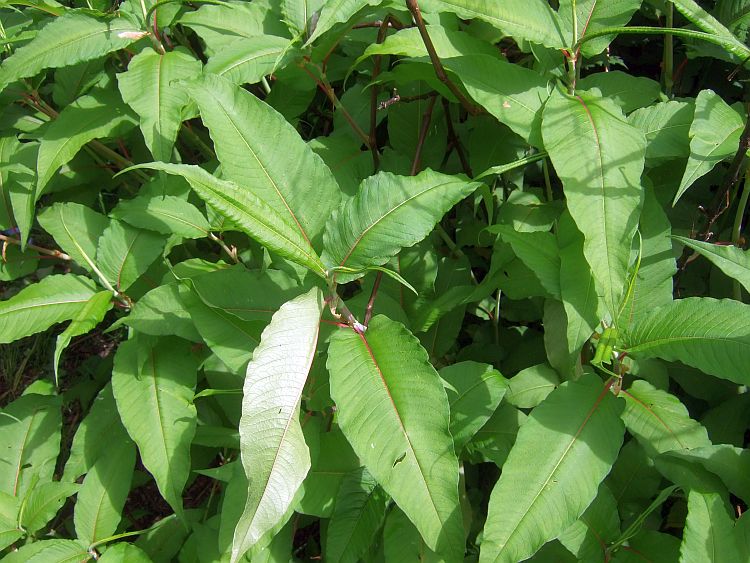
Himalayan knotweed
Japanese knotweed can also hybridise with related species. The most common hybrids are Japanese knotweed and Giant knotweed. The hybrids can spread by seed, unlike Japanese knotweed, during its early introduction, when male plants were absent in the United Kingdom.
This distinction is important because Japanese knotweed plants usually only reproduce from cut pieces of stem and rhizome. In contrast, hybrid knotweed plants can reproduce from seed and remain dormant in the soil over successive growing seasons as a ‘seed bank’.
Although Japanese knotweed hybrids more commonly reproduce vegetatively from rhizome fragments, the potential risk of viable seed being present from hybrids can mean that to remove hybrid knotweed from a site:
Japanese knotweed leaf
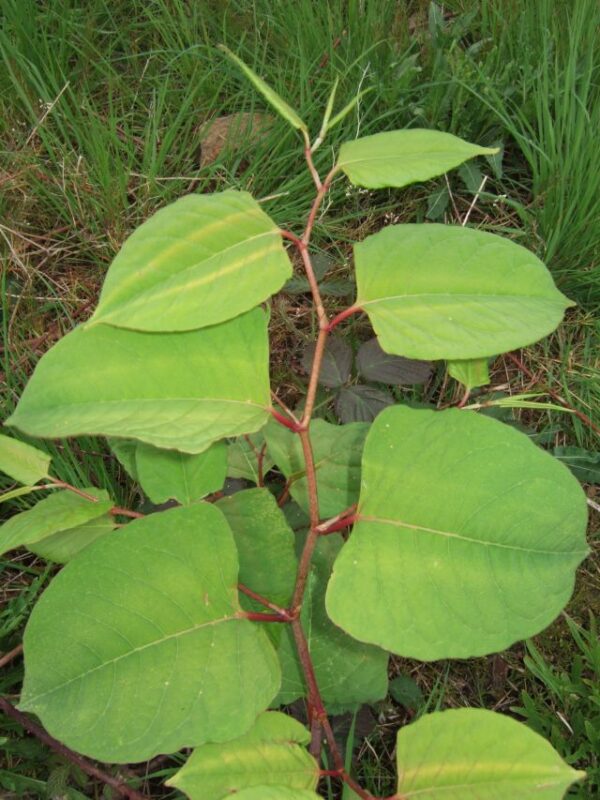
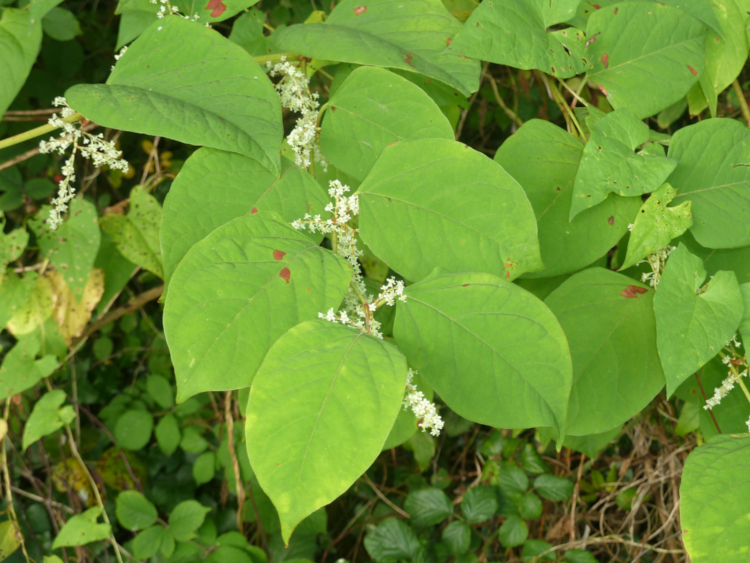
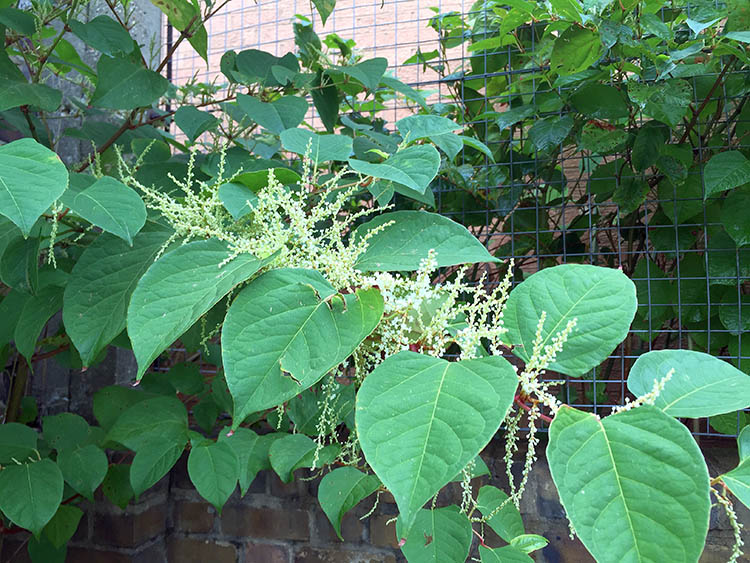
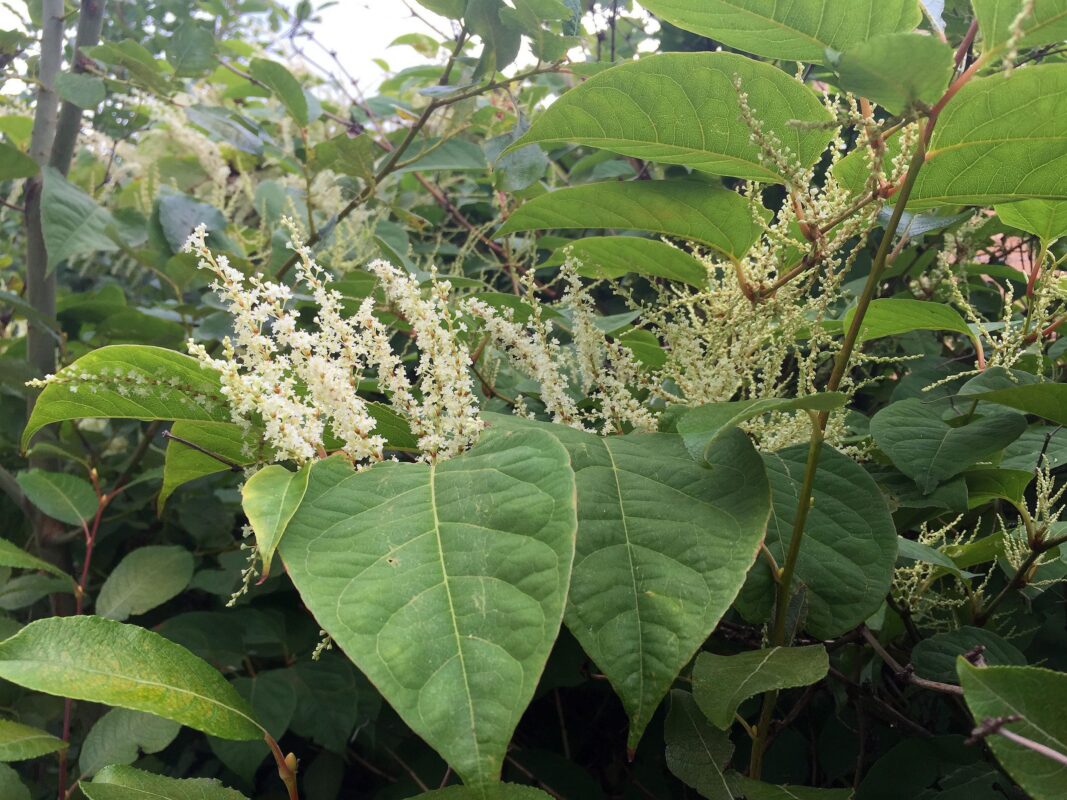
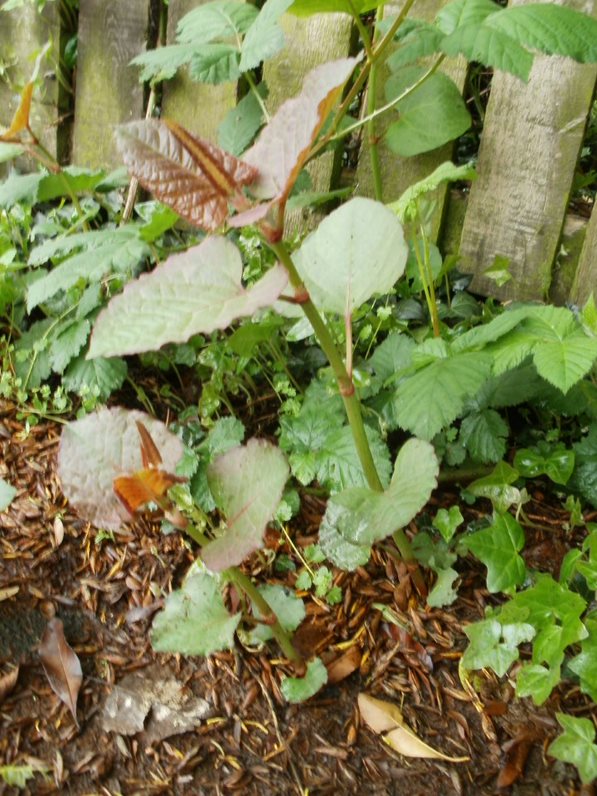
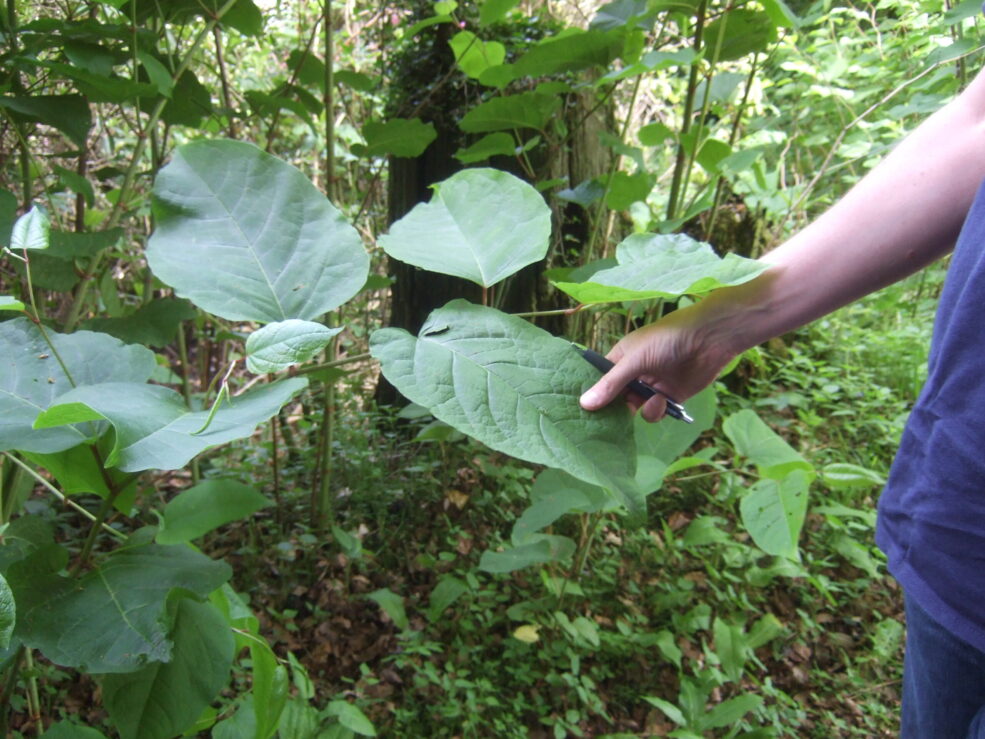
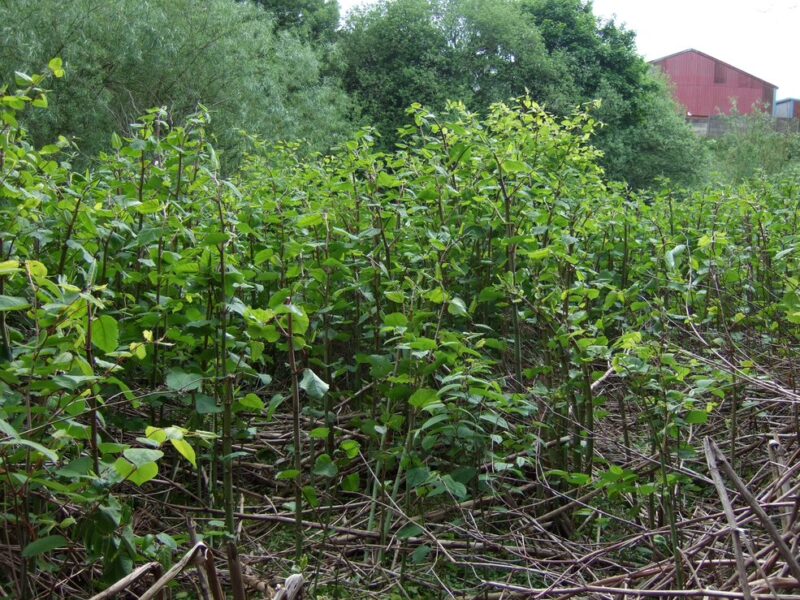
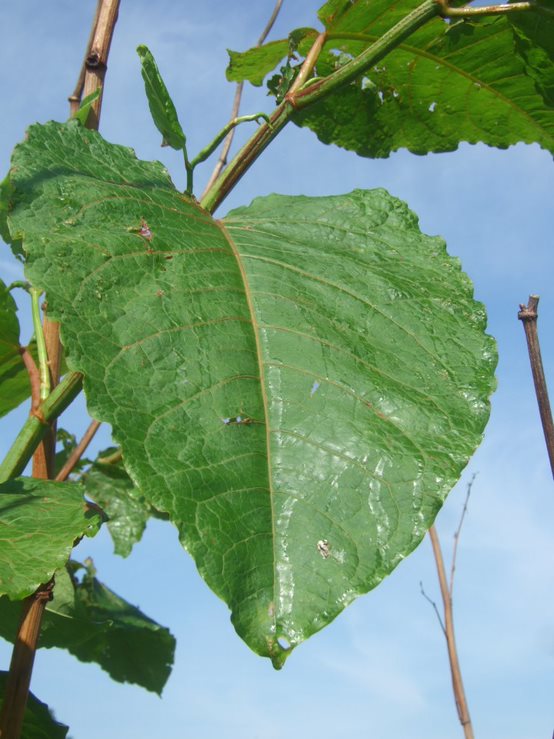
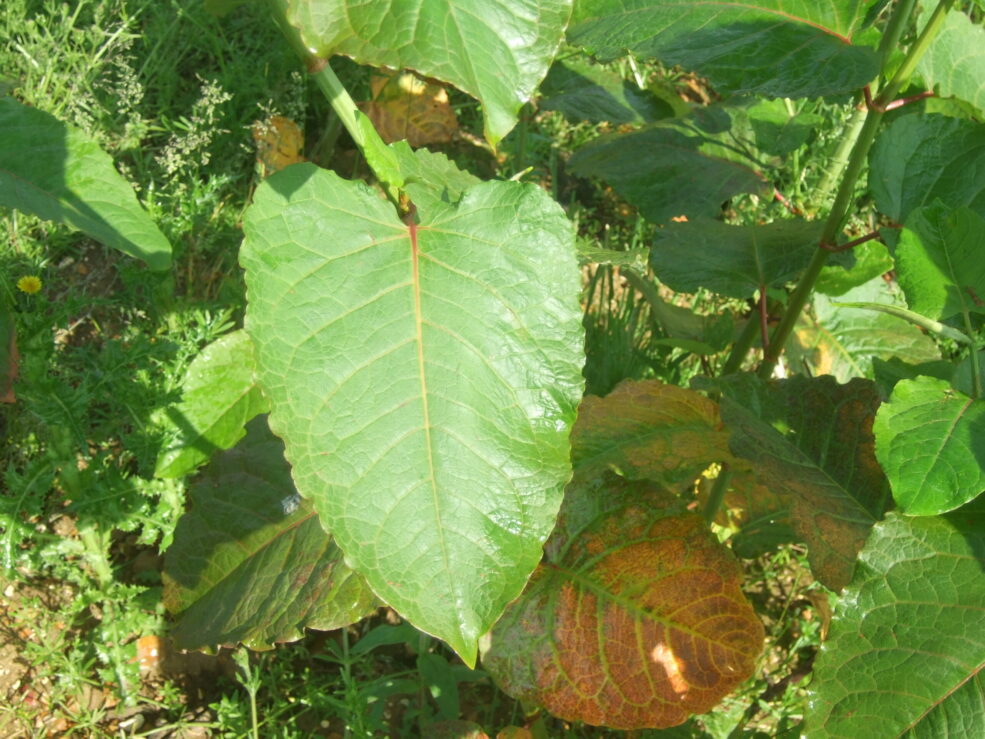
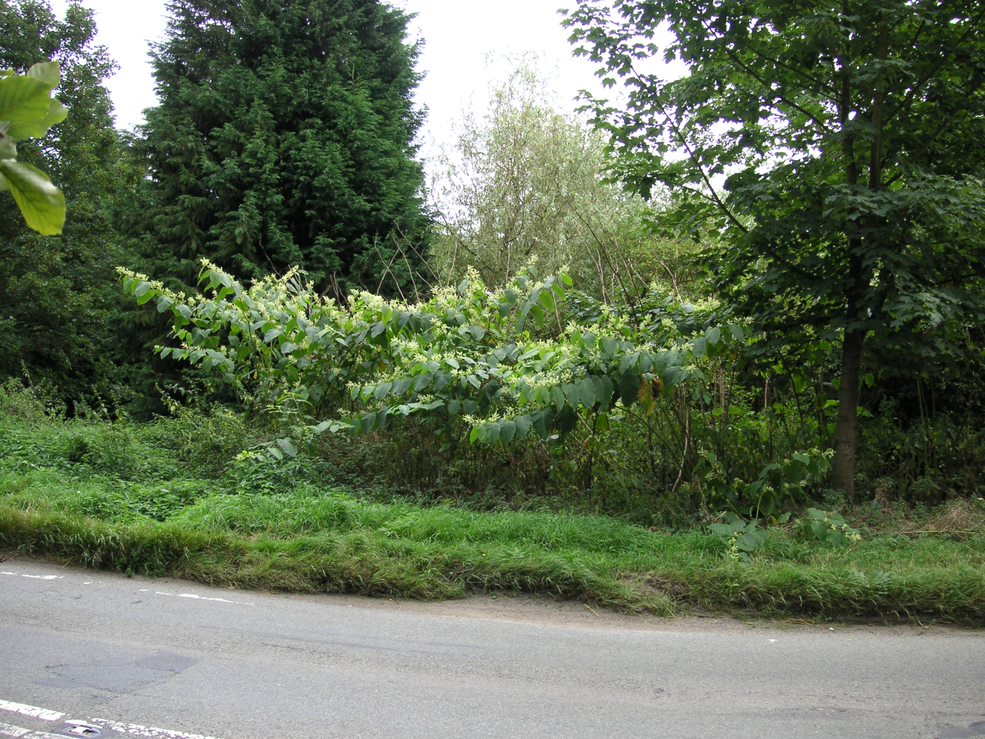
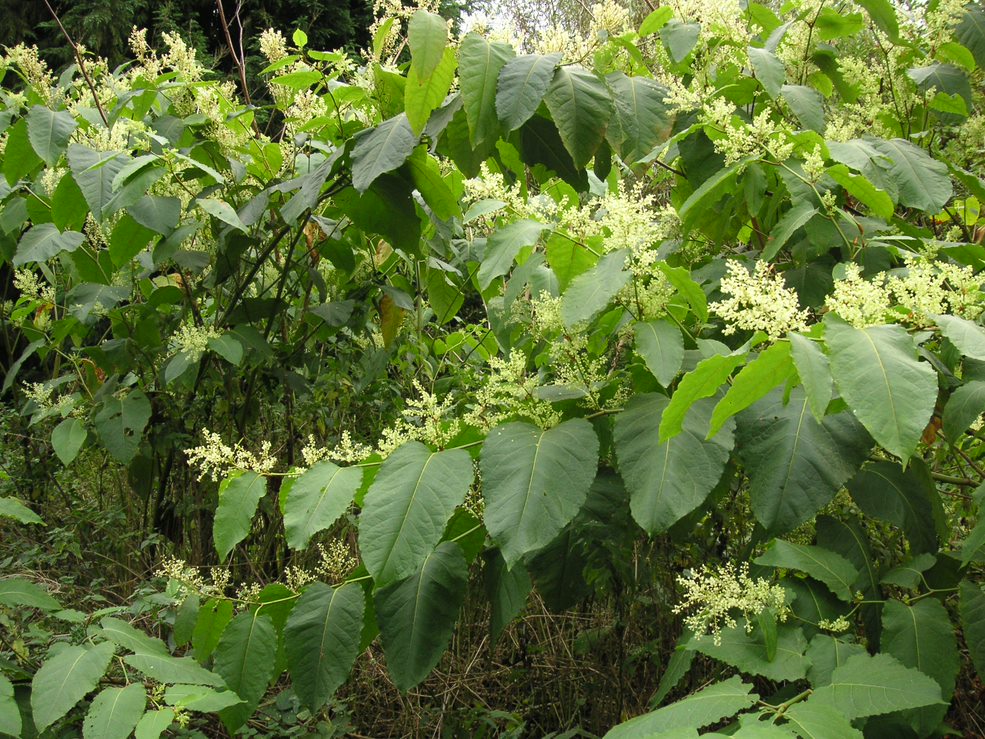
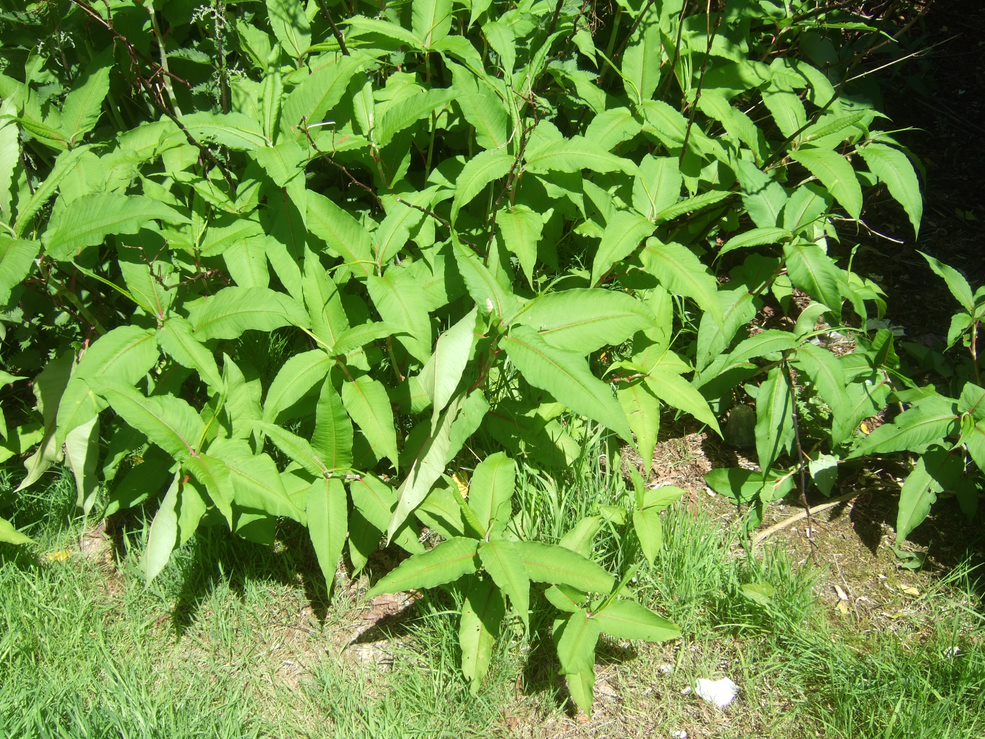
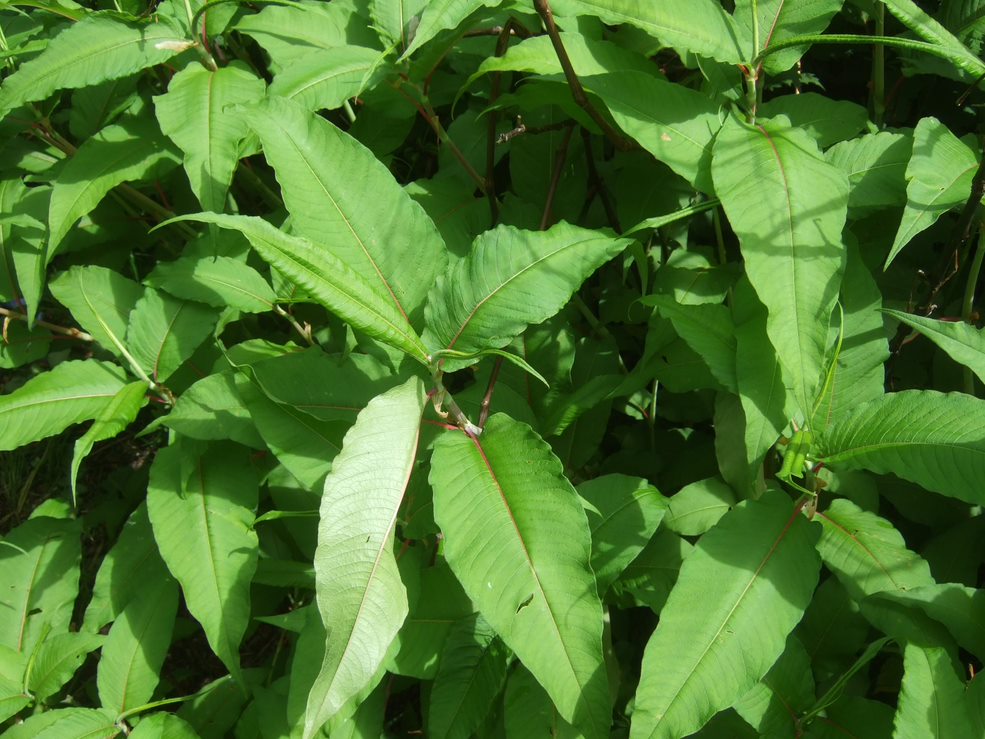
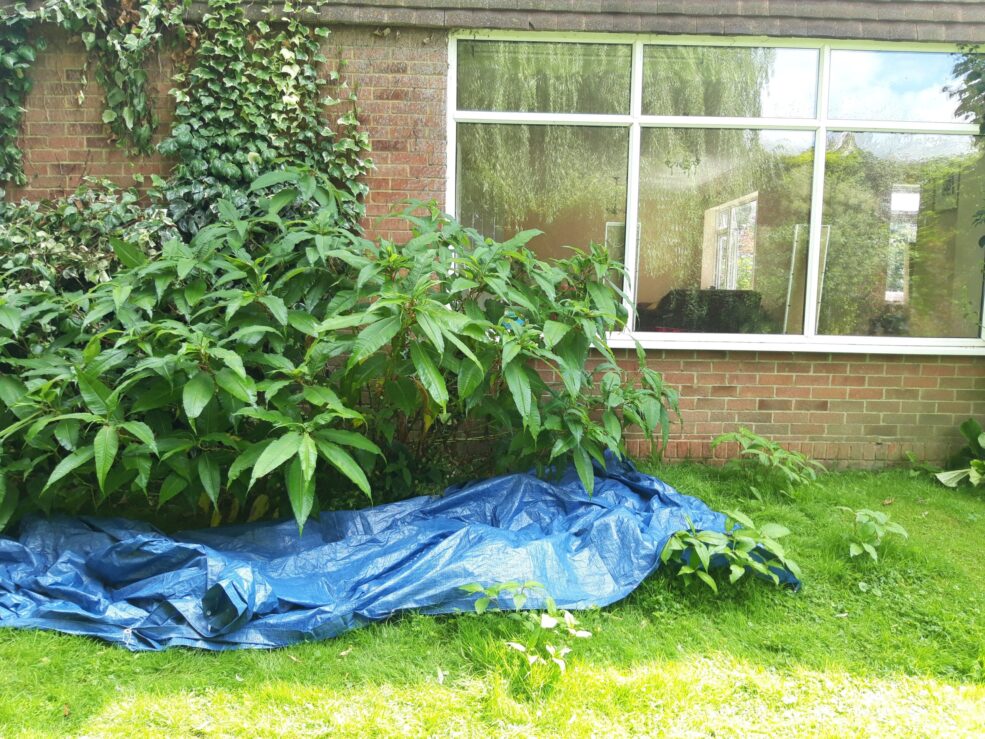
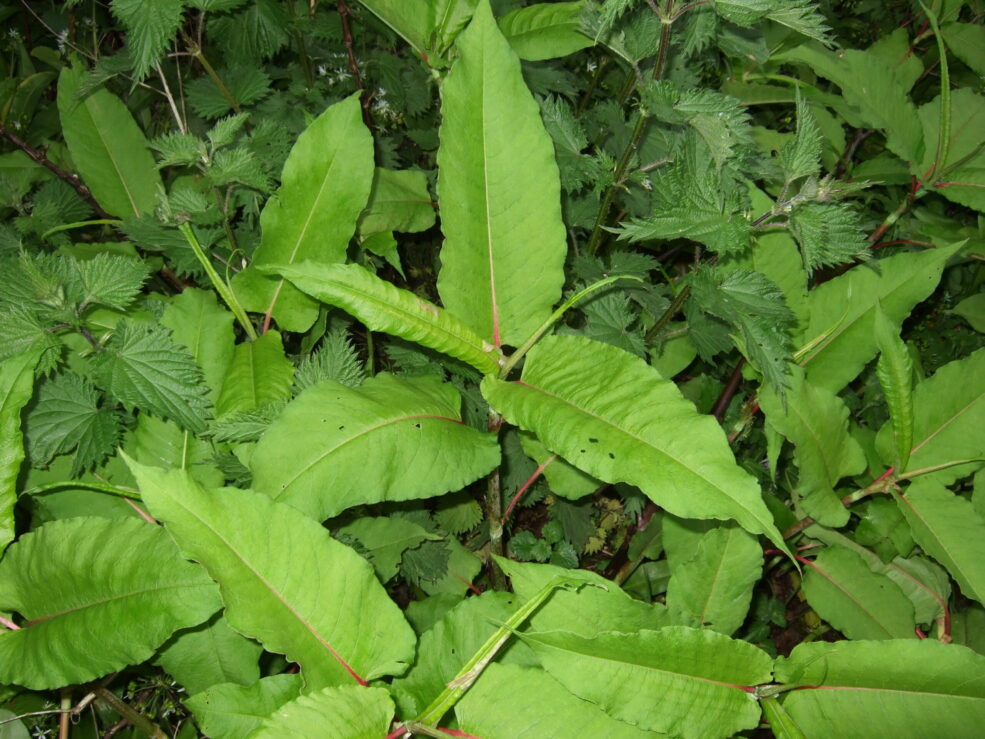
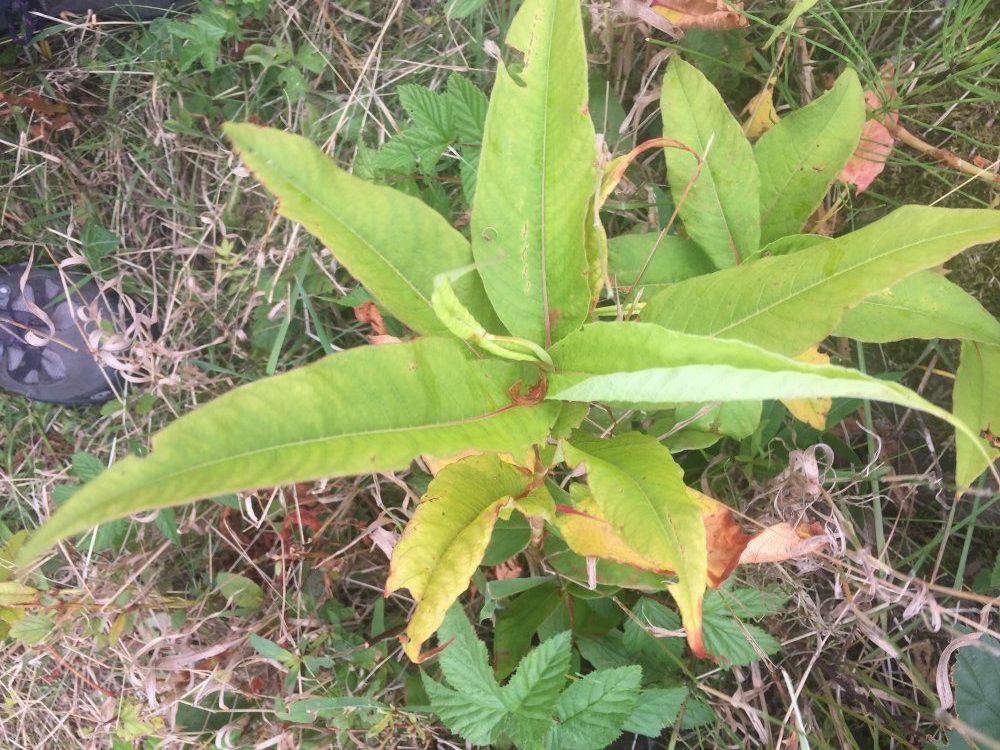
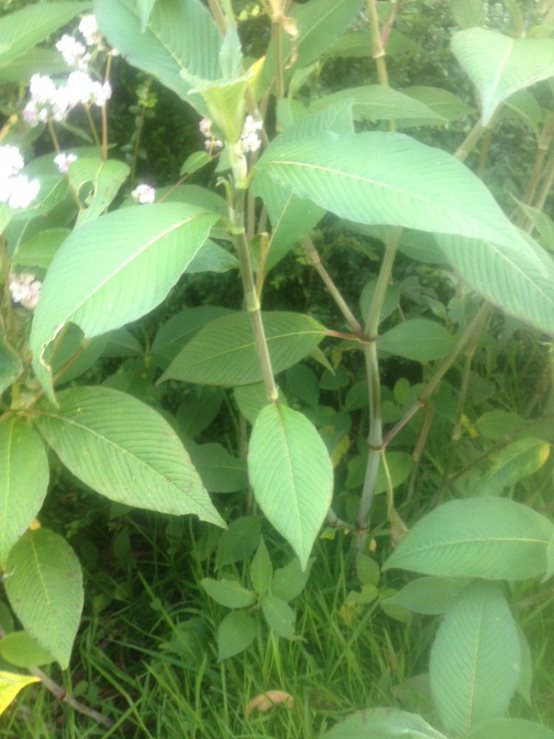
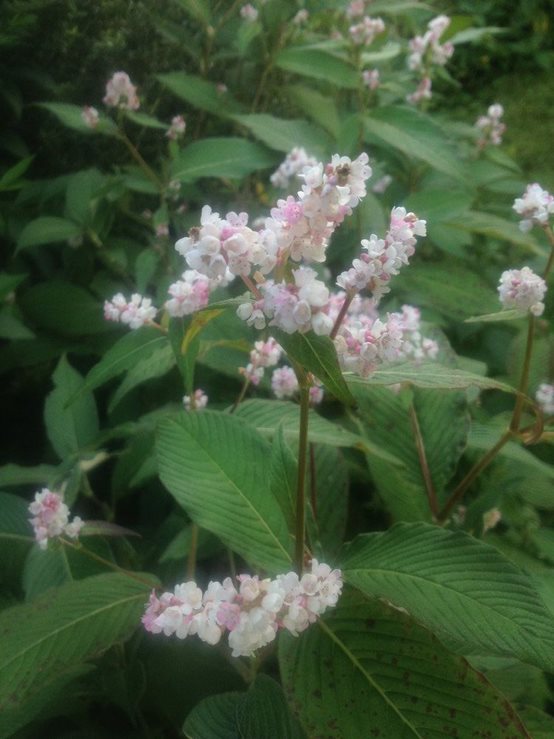
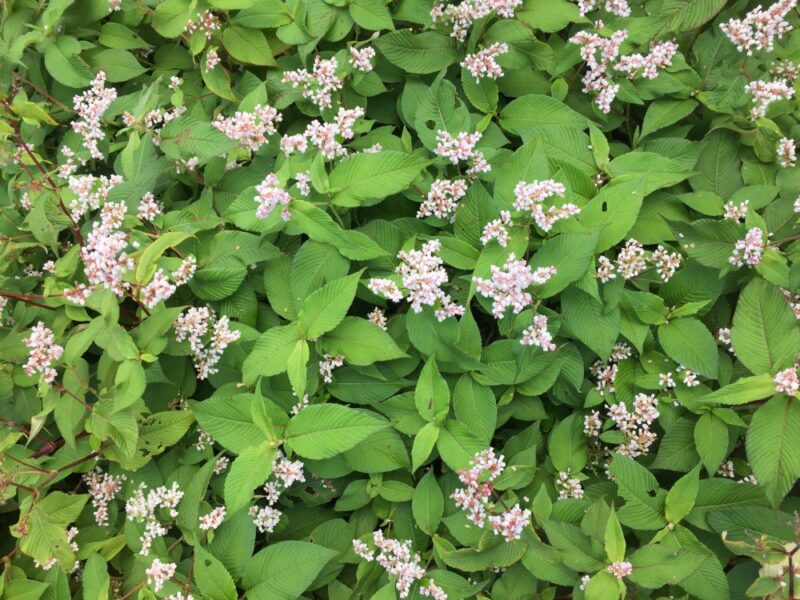
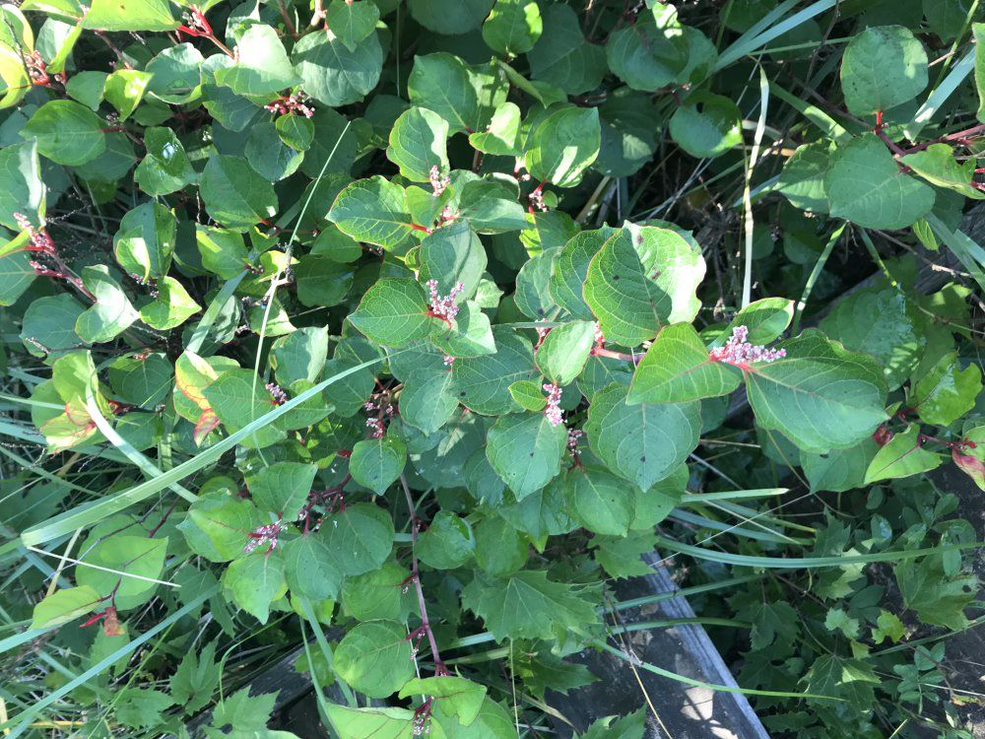
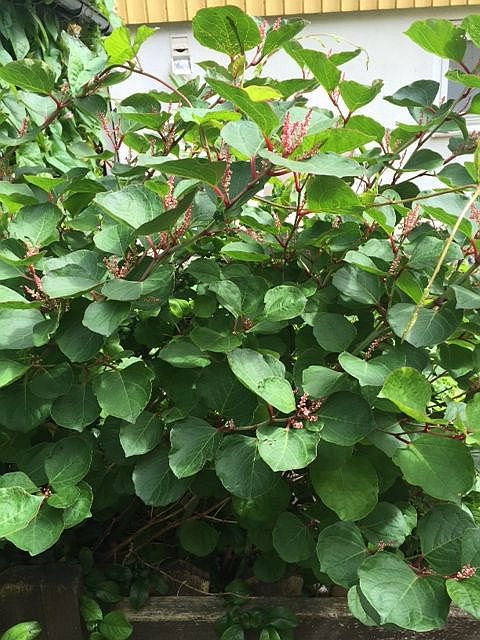
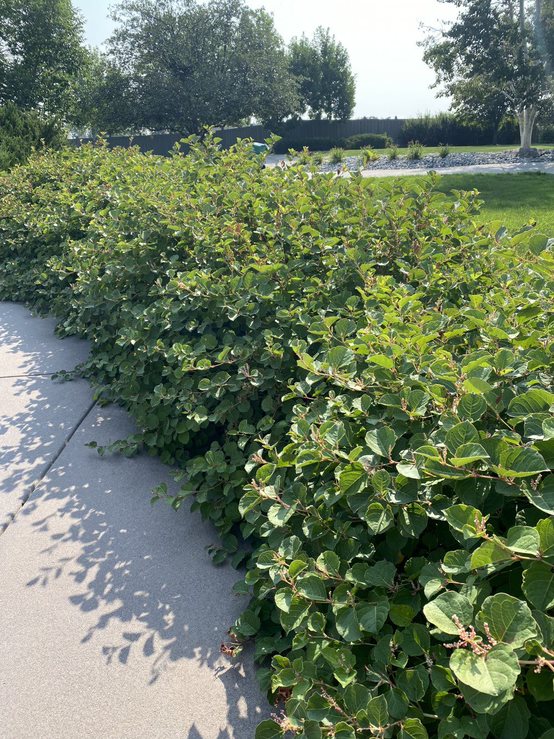
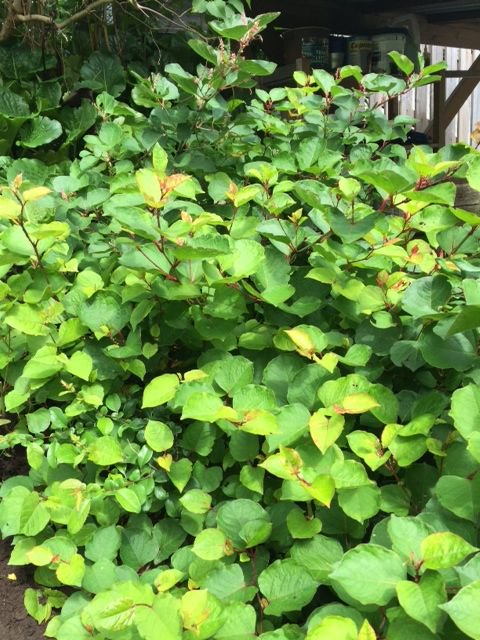
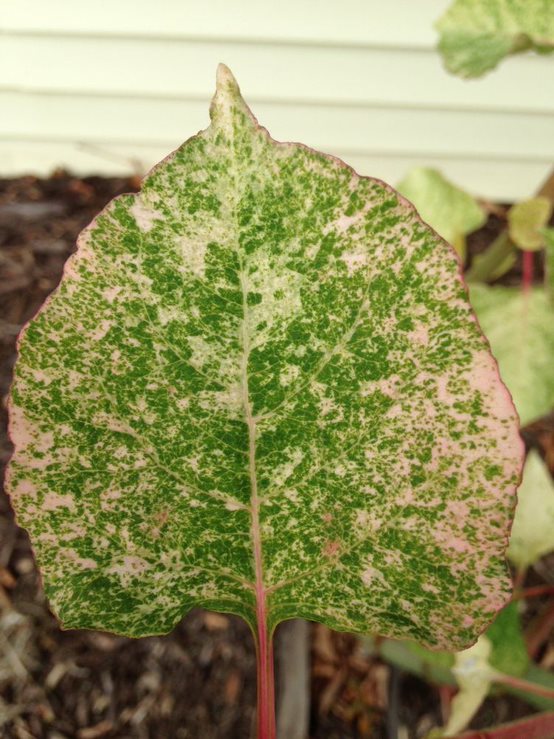
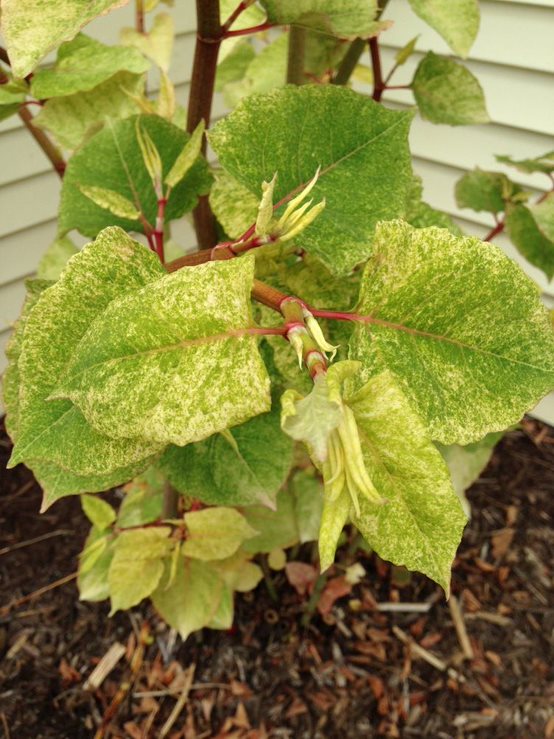
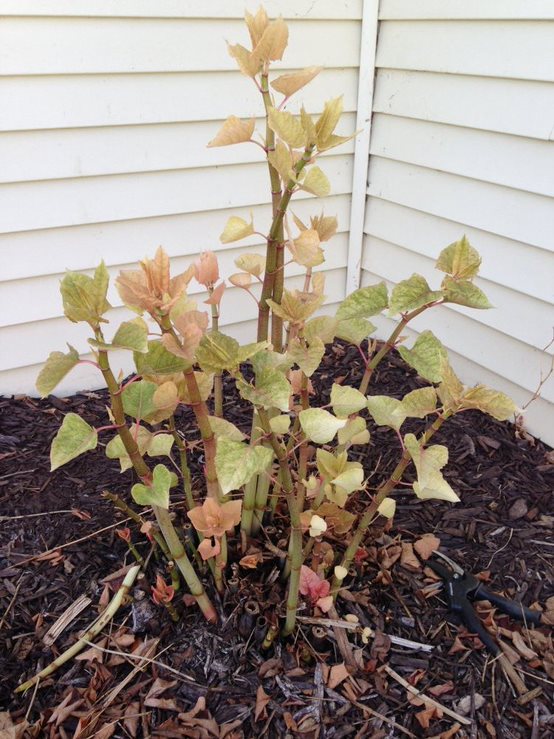
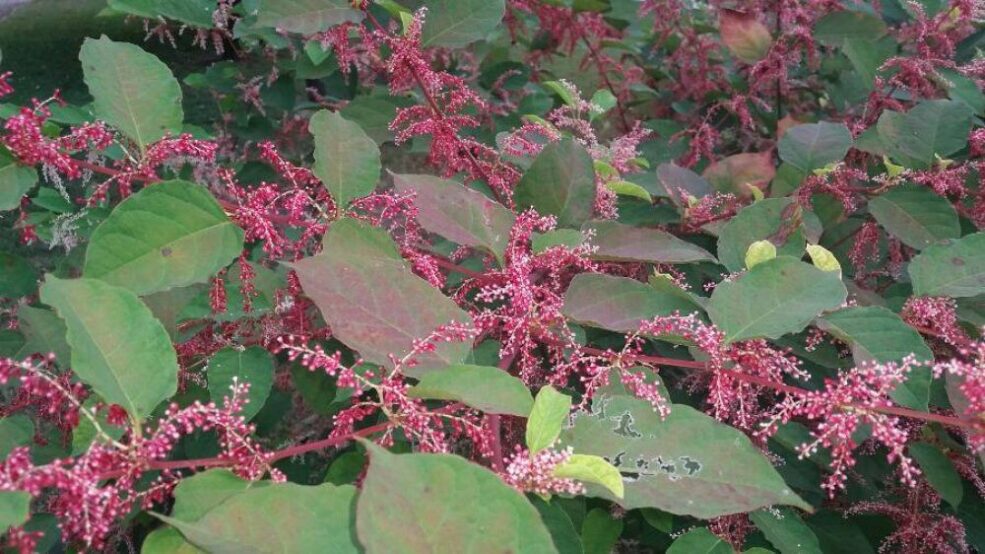
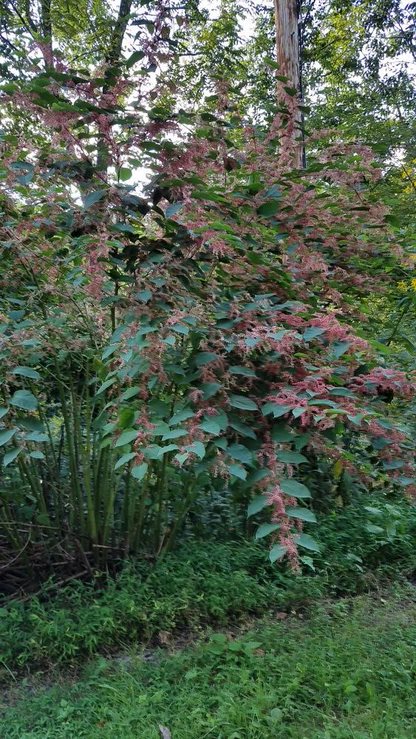
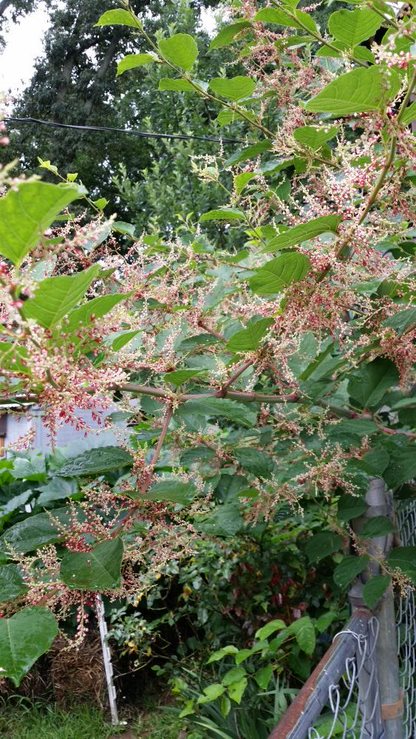
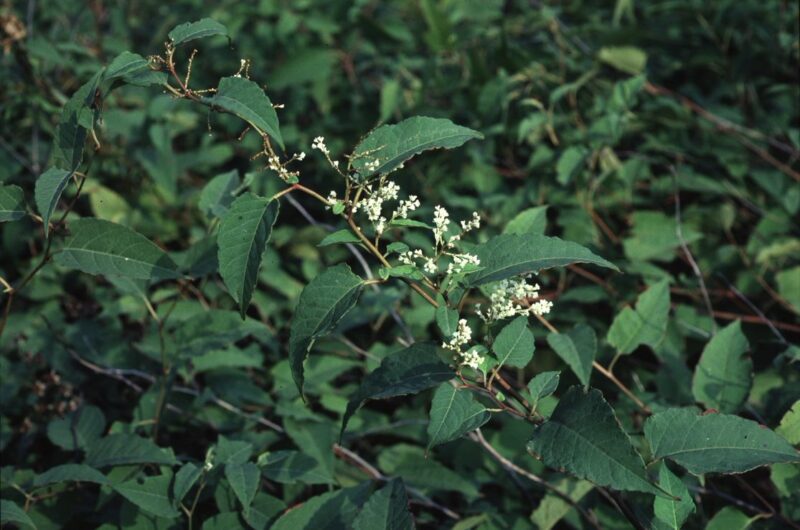
Photo kindly provided by Dr John Bailey
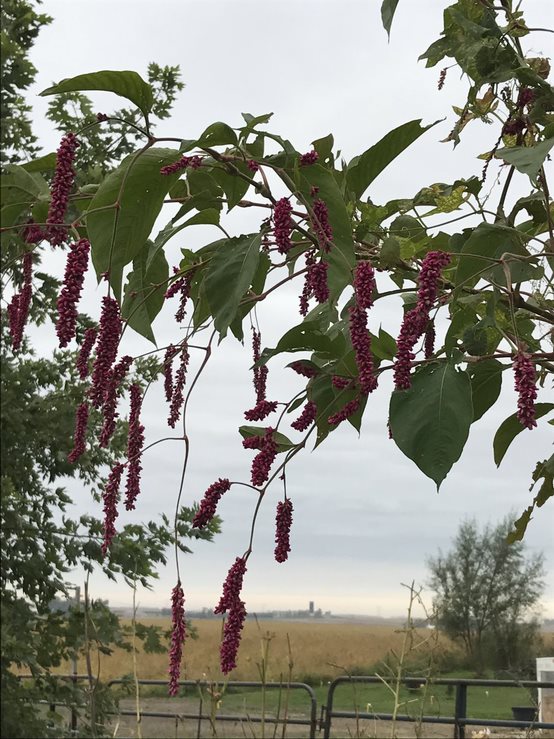
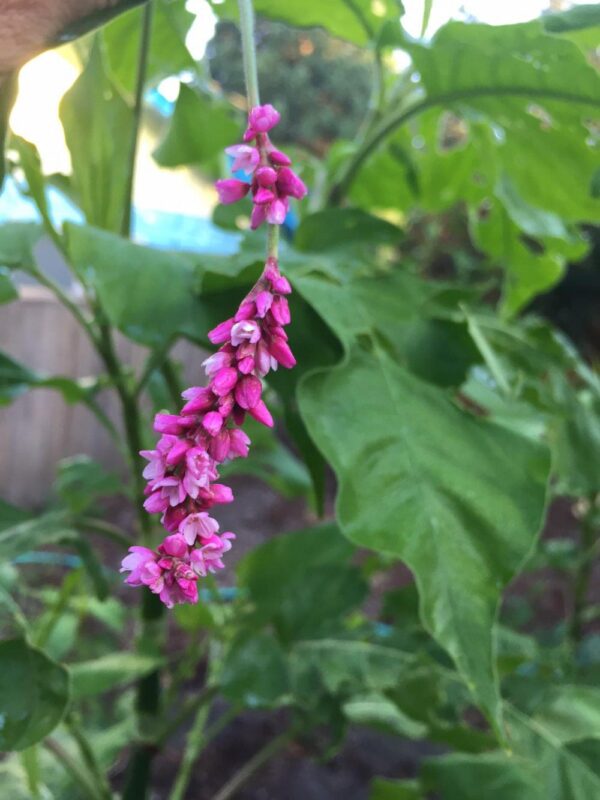
If you are still unsure whether you might have a Japanese knotweed infestation on your property, please send us a picture for your free assessment.
If you do have an infestation, we offer a range of Japanese knotweed surveys and knotweed removal services that follow appropriate guidance [9]. You can also learn more about the cost of removing Japanese knotweed.
It might also be a good idea to familiarise yourself with Japanese knotweed legislation and learn more about our Japanese knotweed expert witness services.
Feel free to contact us to speak with one of our award-winning, PCA-accredited Japanese knotweed consultants, who can help with any Japanese knotweed identification or treatment concerns.
[2] https://www.gov.wales/japanese-knotweed-public-information-controlling-invasive-species
[3] https://www.nonnativespecies.org/non-native-species/information-portal/view/1495
[4] https://www.rhs.org.uk/weeds/japanese-knotweed
[6] https://www.cabi.org/invasivespecies/species/japanese-knotweed-alliance/
[7] https://peerj.com/articles/5246/
[8] https://link.springer.com/article/10.1007/s10530-018-1684-5
[9] https://www.property-care.org/professionals/guidance/invasive-weeds/japanese-knotweed