
Call us free on 0808 168 9540
Call us free on 0808 168 9540
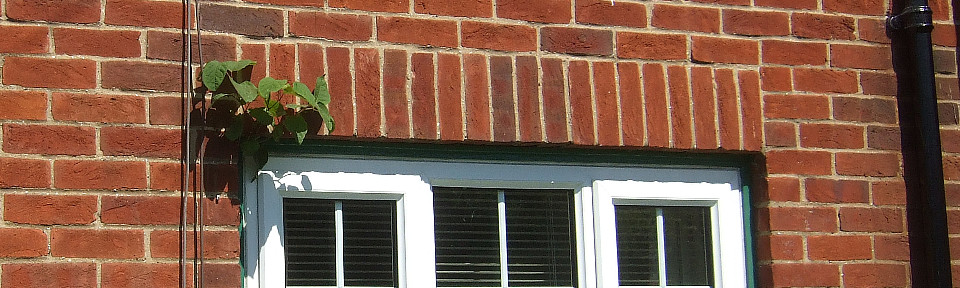
A variety of laws have been put in place to regulate Japanese knotweed growth in the UK. Phlorum has the experience and expertise to provide Knotweed legal advice.








Allowing Japanese knotweed to escape from your land could attract third party litigation action and/or civil proceedings against you. If you allow knotweed to spread onto an adjacent property an order could be served under nuisance legislation. Not taking appropriate measures to identify and remove Japanese knotweed could also quite easily result in spreading it and therefore breaking the law.
Civil litigation is by far the most active area of law in terms of action taken against people who allow knotweed to cause problems for others. In comparison with other legislation, the fines and costs associated with litigation are often much greater.
At Phlorum we have significant experience in providing Japanese knotweed expert witness services in legal cases involving knotweed. This includes attendance at court, the Lands Tribunal and at Public Inquiries. We also have a partnership with a specialist practice in this area to assist in clients recovering treatment costs in Japanese knotweed legal cases.
We have been called upon as Expert Witnesses in high-profile Japanese knotweed cases, including the Williams and Waistell v Network Rail landmark legal case in which Phlorum provided the support in both claimants’ actions against the rail operator.
The Police, Environment Agency and Local Authorities are not obliged to control Japanese knotweed on behalf of a landowner. Responsibility usually rests on the landlord or tenant of the land.
However, recently reformed powers under the Anti-social Behaviour, Crime and Policing Act 2014 can now be used against a property owner if it can be proven that their Japanese knotweed is having a detrimental effect, of a persistent or continuing nature, on the quality of life of those nearby. This law includes provisions for the issuing of Community Protection Notices, which are discussed in detail below.
Additionally, in early 2014, the Law Commission issued guidance for the introduction of Species Control Agreements and Species Control Orders to encourage, or force, landowners to take action to stop invasive non-native species that arise on their property from affecting their neighbours. Such legislation is already in place in Scotland.
The CPN is a legal tool introduced by the Anti-social Behaviour Crime and Policing Act 2014. CPN has been designed to deal with:
“unreasonable, ongoing problems or nuisances which negatively affect the community’s quality of life by targeting the person responsible”.
However, the CPN is not meant to replace the statutory nuisance, which has a higher threshold than CPNs.
Nonetheless, the CPN’s threshold is designed to be broad, covering issues as disparate as graffiti and dog-fouling to Japanese knotweed growth.
A CPN can be issued by Local Authorities (LAs), the Police and Police Community Support Officers (PCSOs) to someone who can be held responsible for the anti-social behaviour.
Before issuing a notice, the person considered responsible for the anti-social behaviour should have been issued with a warning, and allowed enough time to rectify the situation. If they fail to do so the designated authorities will issue the notice.
Breach of any requirement of the notice would be a criminal offence, subject to a fixed penalty notice or prosecution.
CPN should be used when an unreasonable and persistent behaviour is affecting the community’s quality of life. However, before enforcing the notice the situation should be discussed with the local community and neighbours to try to find an agreed action plan. Collaboration between neighbours should be promoted and encouraged first by the Authorities.
The presence of Japanese knotweed in a neighbouring property can have an impact on adjoining properties, such that they might be blighted and diminished in value. This can mean that many lenders won’t offer mortgages on any knotweed affected property. If an agreement about the Japanese knotweed treatment and removal cannot be found between neighbours, or if the Japanese knotweed is disturbed (facilitating the spread) by the landowner, it can be considered as a nuisance for the community.
The Wildlife and Countryside Act (WCA) 1981 states that it is an offence to plant or otherwise cause Japanese knotweed to grow in the wild. With a similar approach, causing the spread of Japanese knotweed into neighbouring properties can be considered a nuisance and a detrimental activity under the Anti-social Behaviour, Crime and Policing Act 2014.
Therefore, if the Japanese knotweed is identified and the landowner doesn’t want to collaborate or deal with the issue, a community protection warning may be considered.
If a member of the community wishes to apply for a community protection warning against an anti-social behaviour perpetrator, they will need to contact the local police via the non-emergency 101 number or by visiting the local force’s website.
It must be remembered that having knotweed in your own property is not a criminal offence. Failing to control its spread, e.g. not collaborating with neighbours in treating it, can be considered an anti-social behaviour, which could elevate to a criminal offence if a CPN is issued and not acted upon.
However, if you think a warning and a notice have been issued against you unreasonably you can appeal and challenge the CPN in court.
Section 14(2) of the Wildlife and Countryside Act 1981 states that:
if any person plants or otherwise causes to grow in the wild any plant which is included in Part 2 of Schedule 9, he shall be guilty of an offence”.
Japanese knotweed is a Schedule 9 listed plant, as are Himalayan balsam, rhododendron, giant hogweed and numerous other plants.
According to the Environmental Protection Act (EPA) 1990, controlled waste must be disposed of at appropriately licensed waste facilities. Japanese knotweed plant material and/or any knotweed contaminated soil that is discarded, or is intended to be discarded, is likely to be classified as controlled waste.
Section 34 of the EPA imposes a duty of care on persons who produce, import, dispose of, or treat controlled wastes. The movement off site of controlled waste must be covered by waste transfer notes. The transfer notes must be completed and signed; giving a written description of the waste, a European Waste Catalogue (EWC) code, a Standard Industrial Classification (SIC) code, and confirmation that the client has discharged their duty in relation to the waste hierarchy. This description must be comprehensive enough to allow the receiver of the waste to handle it in accordance with their own duty of care. These provisions are set up in The Waste (England and Wales) Regulations 2011, and the Environmental Protection (Duty of Care) Regulations 2014 in Scotland.
Japanese knotweed waste must be transferred offsite by an authorised person, in other words a person who is either a registered carrier or who is exempt from registration by the Controlled Waste (Registration of Carriers and Seizure of Vehicles) Regulations 1991.
Section 33 of the EPA states that it is an offence to deposit, treat, keep or dispose of controlled waste without an environmental permit in England and Wales, or a waste management licence in Scotland. There are exemptions to environmental permits stated in the Environmental Permitting (England and Wales) Regulations 2016, and exemptions to waste management licences in the Waste Management Licensing Regulations 2011 for Scotland. The Government’s Regulatory Position Statement (RPS) 178 ‘Treatment and disposal of invasive non-native plants’ states that if you follow the conditions in RPS 178, then you do not need to apply for an environmental permit to treat or bury non-native plant material.
The Control of Pesticides Regulations 1986 requires any person who uses pesticides to take all reasonable precautions to protect the health of human beings, creatures and plants, to safeguard the environment and to avoid contaminating water. For application of pesticides in or near water, approval from the Environment Agency (in England) should be sought before any pesticide is used.